Qaida Noorania Full Course | Learn Alif Baa Taa to Quran Reading
The Qaida Noorania Full Course is a complete, structured pathway designed to take a beginner from recognizing the Arabic alphabet (Alif Baa Taa) to reading the Qur’an fluently with Tajweed. This system is not simply about memorizing letters — it is about mastering articulation, rhythm, elongation, and pronunciation discipline exactly as the Qur’an was revealed.
Whether you are a child beginning Quran learning, a new Muslim, an adult correcting early mistakes, or a parent teaching at home, this all-in-one course provides the foundational framework necessary for confident Quran recitation.
🎥 Watch the Complete Qaida Noorania Full Course (All 17 Lessons Combined)
This full-course video integrates all 17 lessons into one seamless learning journey. It is ideal for structured progression and long-term revision.
What Is Qaida Noorania?
Qaida Noorania (also known as Noorani Qaida or Al Qaida Al Noorania) is a foundational curriculum used worldwide to teach Quran reading with Tajweed step by step. It introduces Arabic phonetics progressively, ensuring that students develop:
- Correct Makharij al-Huroof (articulation points)
- Sifaat al-Huroof (characteristics of letters)
- Short and long vowel control
- Elongation (Madd) discipline
- Sukoon and stopping awareness
- Shaddah accuracy
- Balanced reading rhythm
This structured methodology prevents common lifelong pronunciation mistakes.
Why Qaida Noorania Is Essential Before Quran Reading
Many learners attempt to read directly from the Qur’an without mastering foundational pronunciation. This often leads to:
- Confusing heavy and light letters (Ṣād vs Seen)
- Shortening Madd letters
- Ignoring Shaddah
- Weak articulation of throat letters (‘Ayn, Ḥaa)
- Improper stopping (Sukoon errors)
Qaida Noorania corrects these issues at the root level.
Arabic is highly precise. A small vowel change alters meaning. Without systematic training, fluency becomes inconsistent.
Complete Lesson Breakdown (1–17) with Video Access
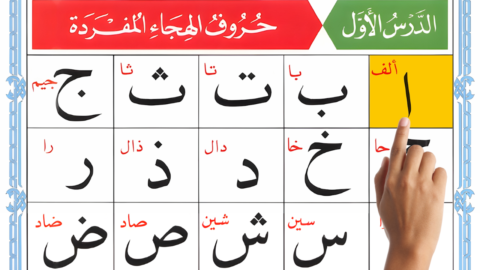
Lesson 1 – Arabic Alphabet (Alif Baa Taa)
Lesson 1: Students learn the 28 Arabic letters in isolated form.
Focus areas:
- Letter recognition
- Correct articulation points
- Throat letters
- Heavy vs light letters
This lesson builds phonetic awareness and pronunciation clarity.
Lesson 2 – Connected Letters
Lesson 2: Learners understand how letters connect in beginning, middle, and end positions.
Skills developed:
- Word formation
- Reading flow
- Visual recognition of joined letters
This transforms recognition into reading.
Lesson 3 – Huroof al-Muqatta’at
Lesson 3: Students practice isolated Quranic letter combinations such as:
- Alif Laam Meem
- Yaa Seen
- Taa Haa
This strengthens articulation control and elongation awareness.
Lesson 4 – Harakat (Fatha, Kasra, Damma)
Lesson 4: Introduction to short vowels:
- Fatha (a)
- Kasra (i)
- Damma (u)
Students learn how vowels shape sound and meaning.
Lesson 5 – Tanween (Double Vowels)
Lesson 5: Tanween introduces nasalized double vowels.
Learners develop:
- Ghunnah control
- Proper vowel extension
- Smooth word endings
Lesson 6 – Harakat & Tanween Practice
Lesson 6: Reinforcement drills improve fluency, speed control, and sound accuracy.
Lesson 7 – Madd Letters (Long Vowels)
Lesson 7: Students learn:
- Alif Madd
- Waw Madd
- Ya Madd
- Standing Fatha
- Standing Kasra
- Standing Damma
Madd Asli (natural elongation) is introduced with two-count timing.
Lesson 8 – Huroof al-Madd & Huroof al-Leen
Lesson 8: Leen letters are introduced:
- Waw after Fatha
- Ya after Fatha
Students develop softness and airflow control.
Lesson 9 – Combined Vowel Practice
Lesson 9: Integration of:
- Tanween
- Madd
- Leen
This builds rhythm and fluency.
Lesson 10 – Sukoon
Lesson 10: Students learn:
- Unvowelled letters
- Clean stopping
- Consonant clarity
Sukoon strengthens articulation discipline.
Lesson 11 – Advanced Sukoon Practice
Lesson 11: Complex consonant transitions and Quranic word drills enhance reading control.
Lesson 12 – Shaddah (Tashdeed)
Lesson 12: Shaddah introduces doubled consonants.
Students learn:
- Emphasis control
- Ghunnah with Shaddah
- Balanced articulation
Lesson 13 – Advanced Shaddah
Lesson 13: Advanced drills combine vowels and doubled letters in Quranic examples.
Lesson 14 – Shaddah & Sukoon Combined
Lesson 14: Students apply mixed Tajweed rules smoothly.
Lesson 15 – Double Shaddah in One Word
Lesson 15: Complex articulation control for advanced reading fluency.
Lesson 16 – Madd + Shaddah + Sukoon Integration
Lesson 16: Integration stage before fluent Quran reading.
Lesson 17 – Final Comprehensive Practice
Lesson 17: All rules combined:
- Harakat
- Tanween
- Madd
- Sukoon
- Shaddah
Students transition confidently to Quran recitation.
Tajweed Principles Covered in This Full Course
This course systematically introduces:
Makharij al-Huroof – articulation points
Sifaat al-Huroof – characteristics of letters
Tafkheem & Tarqeeq – heavy and light letters
Madd Asli – natural elongation
Ghunnah – nasal sound
Qalqalah – echo letters
Sukoon – unvowelled consonants
Shaddah – doubled letters
These foundational rules prepare learners for advanced Tajweed studies.
Learning Path: Beginner to Fluent Reader
Stage 1 – Letter Recognition
Stage 2 – Vowel Application
Stage 3 – Elongation Control
Stage 4 – Unvowelled Consonant Practice
Stage 5 – Double Consonant Mastery
Stage 6 – Integrated Tajweed Fluency
Each stage builds upon the previous one.
Who Should Not Skip Qaida Noorania?
If you:
- Struggle with heavy letters
- Shorten long vowels
- Mispronounce throat sounds
- Hesitate while reading
- Learned informally without structure
You should not skip this foundation.
Study Plan Recommendation
Daily 20 minutes practice:
Week 1 – Lessons 1–4
Week 2 – Lessons 5–9
Week 3 – Lessons 10–14
Final 3–4 days – Lessons 15–17 + Revision
Consistency brings transformation.
After Completing This Course
Next steps:
- Quran Reading Course (Juz 1)
- Advanced Tajweed Practice
- Makharij Refinement Series
This ensures continuous improvement.

Frequently Asked Questions (FAQ)
What is Qaida Noorania?
It is a structured foundational system to teach Quran reading step by step.
How long does completion take?
Study for a manageable period each day and move on when you can read accurately. Completion time varies; a teacher’s feedback is more useful than a fixed deadline.
Is it suitable for adults?
Yes, learners of all ages benefit.
Do I need Arabic knowledge first?
No prior knowledge is required.
Is this course free?
Yes, the Rasool Academy version is available free online.
Conclusion
The Qaida Noorania Full Course is a complete and structured foundation that transforms a beginner into a confident Quran reader. It systematically builds pronunciation accuracy, elongation control, and Tajweed discipline from the first letter Alif to full Quranic fluency.
By following Lessons 1 through 17 in order and practicing consistently, learners develop lifelong recitation confidence. This is not merely an Arabic course — it is a gateway to connecting deeply with the words of Allah.
May Allah make the Qur’an the light of our hearts and grant us excellence in recitation.
اللهم اجعل القرآن ربيع قلوبنا ونور صدورنا.