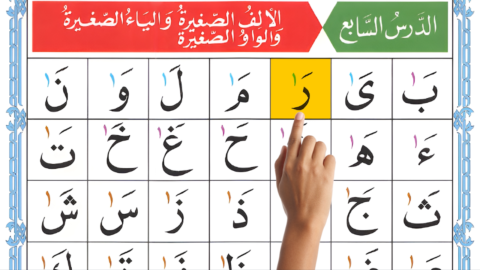
Qaida Noorania Lesson 1 | Learn Alif Baa Taa Pronunciation
Welcome to Rasool Academy’s Qaida Noorania Lesson 1 — your first step toward reading the Quran with Tajweed and understanding the beauty of the Arabic Alphabet: Alif Baa Taa (الحروف العربية).
This lesson begins with the very roots of Quranic Arabic: Alif (ا), Baa (ب), Taa (ت) — the building blocks of every word revealed in the Quran.
At Rasool Academy, our goal is to make Quran learning simple, authentic, and spiritually rewarding for all ages.
Watch Full Qaida Noorania Lesson 1
- Follow the teacher’s clear pronunciation.
- Repeat each letter slowly after the teacher.
- Tip: Use headphones and recite aloud for perfect articulation.
“Listening first and then repeating is the key to mastering Tajweed.”
Lesson Overview
In this first lesson of the Qaida Noorania Arabic Course (Version 01), you will:
- Learn the 28 Arabic letters used in the Quran.
- Recognize their shapes and correct Makharij (articulation points).
- Distinguish between heavy (تفخيم) and light (ترقيق) letters.
- Build the foundation for future Tajweed rules.
Goal: Pronounce each letter clearly before joining letters in Lesson 2.
Why Learning the Arabic Alphabet Matters
The Arabic Alphabet is the gateway to the Quran. Without mastering its letters, you cannot recite with Tajweed or understand the divine meanings.
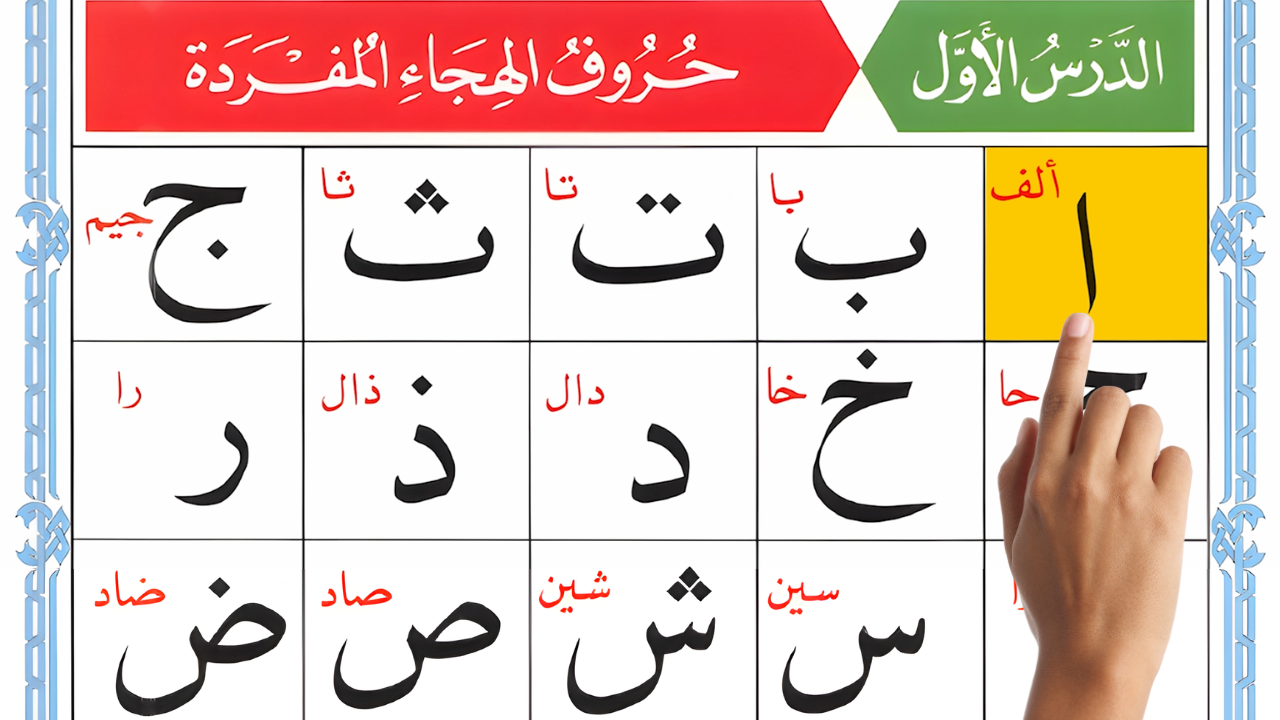
Each letter has its own sound and characteristics. Some letters share an articulation point, so learn their distinguishing qualities carefully.
| Word | Meaning | Common Error | Correct Pronunciation |
|---|---|---|---|
| صَبَرَ (Sabara) | He was patient | pronounced with Seen | use heavy ص (Saad) |
| حَمْد (Hamd) | Praise | read with light Haa | use deep ح (Ha) |
To recite the Quran properly is not just a skill — it is an act of ibadah (worship).
Makharij – How Each Letter Is Pronounced
| Letter | Origin (Makhraj) | Description |
|---|---|---|
| ا (Alif) | For Alif Madd: the empty space of the mouth and throat; distinguish it from Hamzah (ء). | Long “aa” when after Fatha |
| ب (Baa) | Lips closed | Gentle b sound |
| ت (Taa) | Tip of tongue at the roots of the upper front teeth | Soft t |
| ج (Jeem) | Middle tongue touches palate | Clear j |
| ح (Ha) | Middle throat | Aspirated h |
| خ (Khaa) | Upper throat | Raspy kh |
| ق (Qaf) | Back tongue to soft palate | Deep q |
| م (Meem) | Lips together, nasal | m |
- Correct Makharij = Correct Tajweed.
- It’s the foundation of every future rule.
Step-by-Step Practice Plan
- Listen to each letter three times.
- Repeat after the teacher slowly.
- Observe mouth and tongue movement in the mirror.
- Group letters in sets of five.
- Revise daily for 10 minutes.
Consistency is the secret to fluency — not speed.
Common Mistakes and Corrections
| Mistake | How to Fix It |
|---|---|
| Mixing ح and هـ | Push sound from deeper throat for ح |
| Saying Kaf for Qaf | Back tongue touch soft palate |
| Ignoring Tafkheem | Apply heaviness for ص ط ق |
| Reading left-to-right | Arabic is right-to-left |
| Skipping Ain (ع) | Contract throat slightly |
Connection to Tajweed
Learning the letters is the heart of Tajweed. Once you master sounds and Makharij, rules like Ikhfa, Idgham, and Madd come naturally.
“The one who reads the Quran beautifully will be with the noble, righteous angels.” — Sahih Bukhari 4937
Practical Exercise
- Recite all 28 letters forward and backward.
- Record your voice and compare with the video.
- Practice daily for one week.
- Teach someone else — sharing knowledge cements learning.
Next Lesson – Connecting Letters
Qaida Noorania Lesson 2 – Arabic Joint Letters
Learn how letters connect to form syllables and Quranic words.
This is where reading truly begins.
More Lessons from Rasool Academy
- Qaida Noorania Lesson 1: Learn Arabic Alphabet (Alif Baa Taa)
- Qaida Noorania Lesson 2: Learn Arabic Joint Letters
- Qaida Noorania Lesson 3: Huroof e Muqattaat in Quran
- Qaida Noorania Lesson 4: Harakaat – Fatha, Kasra, Damma
- Qaida Noorania Lesson 5: Tanween – Double Fatha, Kasra & Damma
- Qaida Noorania Lesson 6: Harakaat & Tanween Practice
- Qaida Noorania Lesson 7: Alif Madd, Ya Madd & Waw Madd
- Qaida Noorania Lesson 8: Huroof al Madd & Huroof al Leen
- Qaida Noorania Lesson 9: Practice Tanween, Madd & Leen Letters
- Qaida Noorania Lesson 10: Sukoon Practice in Arabic
- Qaida Noorania Lesson 11: Sukoon in Quranic Words
- Qaida Noorania Lesson 12: Learn Shaddah (Tashdeed)
- Qaida Noorania Lesson 13: Shaddah in Quran – Complete Practice
- Qaida Noorania Lesson 14: Shaddah & Sukoon Combined Practice
- Qaida Noorania Lesson 15: Double Shaddah in One Word
- Qaida Noorania Lesson 16: Shaddah + Sukoon with Madd Letters
- Qaida Noorania Lesson 17: Final Exercises on All Previous Lessons
FAQ
Q1: Can I learn Qaida Noorania online effectively?
Ans. Yes, with video support and daily practice you can learn at home easily.
Q2: How long does it take to complete the course?
Ans. 8–10 weeks for beginners with regular revision.
Q3: Do I need to know Arabic before starting?
Ans. No, this course is for complete beginners.
Conclusion & Dua
Learning the Arabic Alphabet is the first door to Quranic knowledge.
Be patient, consistent, and humble — each letter you pronounce correctly brings you closer to Allah.
اللهم اجعل القرآن ربيع قلوبنا ونور صدورنا.
O Allah, make the Quran the spring of our hearts and the light of our souls.