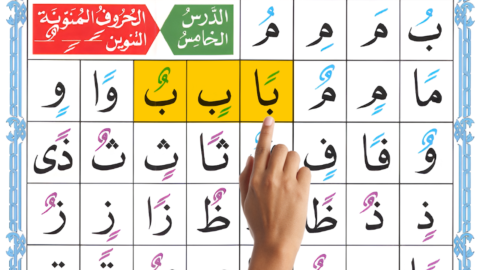
Qaida Noorania Lesson 16 | Practice Shaddah & Sukoon with Madd
Welcome to Qaida Noorania Lesson 16, where you’ll practice Shaddah (ّ), Sukoon (ْ), and Madd (ـ) together — the three foundational elements of Quranic pronunciation.
This lesson will help you recite Arabic words with perfect balance:
- Shaddah gives strength and stress,
- Sukoon marks the absence of a short vowel,
- Madd elongates sound for beauty and rhythm.
By mastering this combination, you’ll learn to control your breath, tone, and timing — essential skills for fluent Quran recitation.
Watch Qaida Noorania Lesson 16
Before you start:
- Observe how the teacher transitions smoothly between doubled, unvowelled and elongated letters.
- Repeat each example aloud slowly.
- Focus on both control and flow — never rush through words that require elongation or stress.
Understanding Shaddah, Sukoon, and Madd Together
In Quranic Arabic, many words combine these three marks.
Each symbol has its role:
| Symbol | Name | Function |
|---|---|---|
| ّ | Shaddah | Double the letter (stress) |
| ْ | Sukoon | Pronounce the consonant without a short vowel |
| ا، و، ي (Madd letters in the correct vowel context) | Madd | Stretch the sound (elongation) |
Together, they form the rhythm of Quranic pronunciation.
Example:
يُسَبِّحُونَ contains Shaddah on Bā and a long Wāw.
يَقُولُونَ has a final Fathah when continuing. If stopping on this word, the Noon becomes temporarily unvowelled and the preceding long vowel follows Madd ʿArid li-s-Sukoon. Do not read the written final Fathah as Sukoon during connected recitation.
These examples teach how to maintain flow while switching between emphasis, elongation, and pause.
How to Read Them Step-by-Step
- Start with Madd — elongate smoothly (2, 4, or 6 beats depending on type).
- Move into Shaddah — pronounce the letter twice (one unvowelled, one with vowel).
- When stopping at a valid word ending, omit the final short vowel according to the stopping rule. Do not pause automatically on every written Sukoon.
- Maintain consistent breath and rhythm throughout the word.

Example word:
يُحَافِظُونَ → “Yuḥāfiẓūn”
- Madd in “ḥā”
- Sukoon in “nūn”
The result: calm, balanced, and melodious pronunciation.
Practice Words (With All Three Rules)
| Word | Transliteration | Meaning |
|---|---|---|
| يُسَبِّحُونَ | Yusabbihūn | They glorify |
| يَقُولُونَ | Yaqūlūn | They say |
| يُحَافِظُونَ | Yuḥāfiẓūn | They guard |
| أَحَقُّهُمْ | aḥaqquhum | more entitled than them |
| يُفَصِّلُونَ | Yufaṣṣilūn | They explain in detail |
| يُدَبِّرُ | Yudabbiru | He manages affairs |
Each word requires precise control of stress, silence, and elongation — the perfect Tajweed triad.
Quranic Examples
| Word | Translation | Surah Reference |
|---|---|---|
| يُسَبِّحُونَ بِحَمْدِ رَبِّهِمْ | They glorify with the praise of their Lord | Ash-Shūrā 42:5 |
| يَقُولُونَ رَبَّنَا | They say: Our Lord | Āl-‘Imrān 3:16 |
| يُفَصِّلُ الْآيَاتِ | He explains the verses | Ar-Ra‘d 13:2 |
| يُدَبِّرُ الْأَمْرَ | He manages the command | Ar-Ra‘d 13:2 |
| أَحَقُّ أَنْ يُتَّبَعَ | More deserving to be followed | Yūnus 10:35 |
Try repeating each verse phrase aloud slowly — feeling the rhythm between Madd (elongation), Shaddah (stress), and Sukoon (rest).
Common Mistakes and How to Fix Them
| Mistake | Reason | Correction |
|---|---|---|
| Over-stretching Madd | Lack of timing control | Identify the Madd type and follow its recitation rule; do not choose a length at random. |
| Ignoring an unvowelled consonant | Reading too fast | Read unvowelled consonants without extra vowels or artificial pauses. |
| Missing Shaddah stress | Weak articulation | Pronounce letter twice clearly |
| Mixing heavy/light letters | Wrong Makharij | Practice articulation daily |
| Losing flow | Poor breath control | Read slowly with steady breathing |
Practice Plan for Learners
- Start with 5 words combining Shaddah, Sukoon, and Madd.
- Repeat each 3 times daily.
- Listen and mimic the teacher’s rhythm from the video.
- Recite one short Quranic verse every day.
- Revise previous lessons weekly to reinforce patterns.
With regular practice, your recitation will sound professional and smooth.
Connection to Tajweed
This lesson connects three essential Tajweed concepts:
- Madd gives melody and flow.
- Shaddah adds power and emphasis.
- Sukoon marks an unvowelled consonant; a pause is governed separately by Waqf.
Together, they make your recitation balanced — neither rushed nor broken —
and help you understand how Quranic words naturally rise and fall in rhythm.
Next Lesson – Final Revision and Practice
Qaida Noorania Lesson 17 – Long Vowels in Arabic (Sagheera)
In Lesson 17, you’ll review everything from Lessons 1–16 through comprehensive exercises.
This final part will ensure you have mastered every Tajweed concept introduced so far.
More Lessons from Rasool Academy
- Qaida Noorania Lesson 1: Learn Arabic Alphabet (Alif Baa Taa)
- Qaida Noorania Lesson 2: Learn Arabic Joint Letters
- Qaida Noorania Lesson 3: Huroof e Muqattaat in Quran
- Qaida Noorania Lesson 4: Harakaat – Fatha, Kasra, Damma
- Qaida Noorania Lesson 5: Tanween – Double Fatha, Kasra & Damma
- Qaida Noorania Lesson 6: Harakaat & Tanween Practice
- Qaida Noorania Lesson 7: Alif Madd, Ya Madd & Waw Madd
- Qaida Noorania Lesson 8: Huroof al Madd & Huroof al Leen
- Qaida Noorania Lesson 9: Practice Tanween, Madd & Leen Letters
- Qaida Noorania Lesson 10: Sukoon Practice in Arabic
- Qaida Noorania Lesson 11: Sukoon in Quranic Words
- Qaida Noorania Lesson 12: Learn Shaddah (Tashdeed)
- Qaida Noorania Lesson 13: Shaddah in Quran – Complete Practice
- Qaida Noorania Lesson 14: Shaddah & Sukoon Combined Practice
- Qaida Noorania Lesson 15: Double Shaddah in One Word
- Qaida Noorania Lesson 16: Shaddah + Sukoon with Madd Letters
- Qaida Noorania Lesson 17: Final Exercises on All Previous Lessons

FAQ
Q1: Why are Shaddah, Sukoon, and Madd taught together?
→ Because in Quranic words, they often appear together and must be pronounced in a balanced way.
Q2: How long should Madd be held?
→ Depending on the rule, usually 2, 4, or 6 beats — don’t over-extend.
Q3: Can Sukoon come after Madd or Shaddah?
→ Yes, and it requires smooth transition without breaking the sound flow.
Q4: How can I improve my timing and flow?
→ Practice with measured recitation (Tarteel), slow rhythm, and daily repetition.
Conclusion
Lesson 16 combines all the key elements of Tajweed in one powerful exercise.
It trains your tongue, voice, and heart to move in harmony — balancing stress, silence, and melody in each Quranic word.
Practice regularly and reflect on the meaning as you recite.
With consistency, your recitation will become both accurate and spiritually moving.
اللهم اجعل القرآن ربيع قلوبنا ونور صدورنا
O Allah, make the Quran the spring of our hearts and the light of our souls.
Madd before an original Shaddah
Do not apply two counts automatically when a long vowel is immediately followed by an original Shaddah in the same word. This is Madd Lazim Kalimi Muthaqqal, held for six counts in Hafs recitation; الضَّالِّينَ in Al-Fatihah 1:7 is an example. Natural Madd in a different position remains two counts. Read the written end vowel when continuing; a temporary stopping Sukoon is not a replacement for the original written vowel.