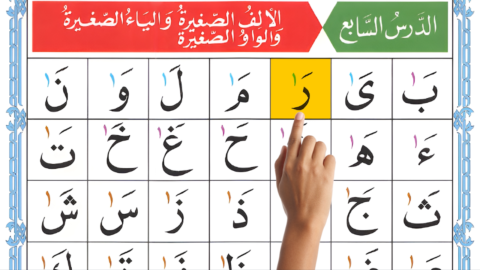
Qaida Noorania Lesson 5 | Learn Tanween in Arabic with Tajweed
Welcome to Qaida Noorania Lesson 5 from Rasool Academy.
In this lesson, we will learn about Tanween (تنوين) — the double vowel marks that add a nasal sound to Arabic words.
Tanween is one of the most beautiful features of Arabic pronunciation.
It helps you say “an, in, un” naturally while reciting Quran with Tajweed.
After mastering Harakat (Fatha, Kasra, Damma) in Lesson 4, this step will teach you how to combine those vowels in double form.
This lesson is perfect for beginners who want to learn how Tanween changes pronunciation and meaning in Quranic Arabic.
Whether you’re a child, a new Muslim, or a learner revising Tajweed, this step is essential for your Quran reading journey.
Watch Full Qaida Noorania Lesson 5
Before you read further:
- Watch and repeat every example after the teacher.
- Focus on mouth and nasal sound (Ghunna).
- Practice slowly and clearly.
The more you listen and repeat, the faster your pronunciation will improve.
Lesson Overview
Topic: Tanween – Double Fatha, Kasra, and Damma
Lesson Number: 5
Book: Qaida Noorania (Arabic Course – Version 01)
Level: Beginner
Objective: To pronounce and identify Tanween in Quranic Arabic correctly.

By the end of this lesson, you will learn:
- What Tanween is and why it’s used in Arabic.
- The three types of Tanween: Fathatain, Kasratain, Dammatain.
- How Tanween sounds like “an, in, un”.
- How to apply Tanween in real Quranic examples.
What Is Tanween?
In Arabic, Tanween (تنوين) means doubling of a vowel sound.
It adds the letter “ن” (noon) sound at the end of a word, but this ن is not written — it’s only pronounced.
There are three types of Tanween:
| Type | Symbol | Sound | Example | Pronunciation |
|---|---|---|---|---|
| Fathatain | ً | “an” | كِتَابًا | Kitaaban |
| Kasratain | ٍ | “in” | كِتَابٍ | Kitaabin |
| Dammatain | ٌ | “un” | كِتَابٌ | Kitaabun |
Notice how each Tanween adds a soft nasal “n” sound at the end.
This is what gives Arabic recitation its melody and rhythm.
Importance of Tanween in Arabic & Quran
Tanween is not just a sound — it changes meaning.
In the Quran, it helps define the grammatical role of words.
Without Tanween, a word might mean something entirely different.
For example:
| Word | With Tanween | Meaning |
|---|---|---|
| كِتَابٌ | A book | General noun (subject) |
| كِتَابٍ | Of a book | Used after prepositions |
| كِتَابًا | A book (object) | Used after verbs |
You’ll notice that every Quranic verse uses these endings carefully to preserve meaning and flow.
Detailed Explanation of Each Tanween
1. Fathatain (ً)
- Two small diagonal strokes above a letter.
- Adds the sound “an”.
- Example: رَجُلًا (Rajulan) – means “a man”.
- Common in the middle of Quranic verses.
For Fathatain, pronounce a short a followed by the Noon sound required in connected reading. Keep the consonant’s own articulation point. Tā Marbūṭah is pronounced t when joining, but h at a normal stop.
2. Kasratain (ٍ)
- Two small diagonal strokes under a letter.
- Adds the sound “in”.
- Example: مُسْلِمٍ (Muslimin) – means “of a Muslim”.
Pronunciation Tip:
Lower your tongue and keep the mouth narrow.
Kasratain sounds lighter and softer.
It is often used after prepositions like في (in) or من (from).
Example:
فِي كِتَابٍ (Fi Kitaabin) – In a book.
3. Dammatain (ٌ)
- Two small Damma signs above a letter.
- Adds the sound “un”.
- Example: عَلِيمٌ (Aleemun) – means “All-Knowing”.
Pronunciation Tip:
Round your lips slightly forward.
Make sure the nasal sound (“n”) is soft at the end.
Dammatain often appears at the end of Quranic verses to complete the rhythm of the recitation.
Tanween and Tajweed
In Tajweed, Tanween is closely connected to the rule of Noon Sakinah and Tanween.
These rules (Idgham, Ikhfa, Iqlab, Izhar) help you understand when the Tanween “n” sound should be clear, merged, or hidden.
For now, focus on clear pronunciation — Tajweed rules will be covered in later lessons.
Common Mistakes to Avoid
| Mistake | Reason | Solution |
|---|---|---|
| Pronouncing Tanween as a separate letter | Overemphasis | Blend softly with the last letter |
| Missing the nasal sound | Weak airflow | Add gentle “n” vibration through the nose |
| Mixing Fathatain and Dammatain | Confusion | Practice each vowel separately |
| Overstretching vowel | Length issue | Keep it short — one beat only |
Practice Table
| Base Word | With Fathatain | With Kasratain | With Dammatain |
|---|---|---|---|
| كِتَاب | كِتَابًا | كِتَابٍ | كِتَابٌ |
| رَجُل | رَجُلًا | رَجُلٍ | رَجُلٌ |
| مُسْلِم | مُسْلِمًا | مُسْلِمٍ | مُسْلِمٌ |
| عَلِيم | عَلِيمًا | عَلِيمٍ | عَلِيمٌ |
| عَبْد | عَبْدًا | عَبْدٍ | عَبْدٌ |
Step-by-Step Practice Plan
- Listen to each example from the video.
- Repeat the Tanween sounds slowly — an, in, un.
- Practice with 10 words daily.
- Read aloud in front of a mirror to monitor your mouth shape.
- Revise Lesson 4 (Harakat) before every practice session.
Regular repetition will make the Tanween sounds automatic and natural in your recitation.
Connection to Quranic Verses
| Arabic excerpt | Brief meaning | Quran reference |
|---|---|---|
| عَلِيمٌ حَكِيمٌ | All-Knowing, All-Wise | 4:26 |
| كِتَابٍ مُبِينٍ | a clear record | 27:75 |
| رَحْمَةٍ مِّنَ اللَّهِ | mercy from Allah | 3:159 |
| نَارٌ حَامِيَةٌ | a fiercely hot fire | 101:11 |
| سَمِيعًا بَصِيرًا | All-Hearing, All-Seeing | 4:58 |
Studying Tanween in Quranic context will strengthen both pronunciation and comprehension.
Next Lesson – Practice Harakat & Tanween Together
Qaida Noorania Lesson 6 – Practice Harakat & Tanween Together
In the next lesson, we’ll combine everything we’ve learned so far —
Harakat (Fatha, Kasra, Damma) and Tanween (Fathatain, Kasratain, Dammatain) —
to improve reading fluency and rhythm.
You’ll also practice joining words smoothly and reading short Quranic sentences correctly.
More Lessons from Rasool Academy
- Qaida Noorania Lesson 1: Learn Arabic Alphabet (Alif Baa Taa)
- Qaida Noorania Lesson 2: Learn Arabic Joint Letters
- Qaida Noorania Lesson 3: Huroof e Muqattaat in Quran
- Qaida Noorania Lesson 4: Harakaat – Fatha, Kasra, Damma
- Qaida Noorania Lesson 5: Tanween – Double Fatha, Kasra & Damma
- Qaida Noorania Lesson 6: Harakaat & Tanween Practice
- Qaida Noorania Lesson 7: Alif Madd, Ya Madd & Waw Madd
- Qaida Noorania Lesson 8: Huroof al Madd & Huroof al Leen
- Qaida Noorania Lesson 9: Practice Tanween, Madd & Leen Letters
- Qaida Noorania Lesson 10: Sukoon Practice in Arabic
- Qaida Noorania Lesson 11: Sukoon in Quranic Words
- Qaida Noorania Lesson 12: Learn Shaddah (Tashdeed)
- Qaida Noorania Lesson 13: Shaddah in Quran – Complete Practice
- Qaida Noorania Lesson 14: Shaddah & Sukoon Combined Practice
- Qaida Noorania Lesson 15: Double Shaddah in One Word
- Qaida Noorania Lesson 16: Shaddah + Sukoon with Madd Letters
- Qaida Noorania Lesson 17: Final Exercises on All Previous Lessons

FAQ Section
Q1: What is Tanween in Arabic grammar?
Tanween means adding a nasal “n” sound (an, in, un) using double vowels. It is a key part of Arabic grammar and Quran recitation.
Tanween does not occur on every noun. Many nouns, including some proper names, take it; nouns with al- do not. Other grammatical restrictions also apply.
Q3: Why does Tanween sound like “noon”?
Because it represents an unwritten noon (ن) sound added at the end of the word.
Q4: How long should Tanween be pronounced?
One beat only — short, soft, and nasal.
Conclusion
Tanween adds beauty, melody, and clarity to Arabic pronunciation.
It’s the bridge between single vowels and advanced Tajweed rules.
When you master Tanween, your Quran reading becomes smoother, more rhythmic, and full of meaning.
Continue practicing daily, and don’t skip revising Lessons 4 and 5 together.
Tanween in connected reading and at a stop
In connected reading, Tanween is a short vowel followed by an unwritten Noon; the next letter determines whether the Noon is clear, merged, changed or concealed. Do not impose a two-count Ghunnah in every case. At a normal stop, -un and -in are dropped; -an normally becomes a two-count ā, with exceptions such as Tā Marbūṭah, which is stopped on as h. Practise connected and stopped forms separately. See Noon Sakinah and Tanween.