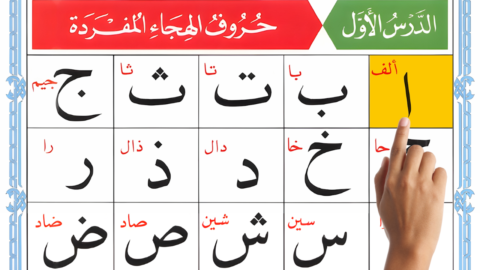
Qaida Noorania Lesson 3 | Huroof al-Muqatta’at in Quran
Welcome to Rasool Academy’s Qaida Noorania Lesson 3 — an important and fascinating part of your Quran learning journey.
In this lesson, you will learn about Huroof al-Muqatta’at (الحروف المقطعة) — the mysterious, separated Arabic letters that appear at the beginning of certain chapters of the Holy Quran.
These letters, such as Alif Laam Meem (الم) or Kaaf Haa Yaa ‘Ayn Saad (كهيعص), have been recited and preserved for over 1400 years, yet their exact meanings remain known only to Allah. Learning to pronounce them correctly with Tajweed is an act of reverence and devotion.
At Rasool Academy, our goal is to make each Quranic lesson clear, spiritually meaningful, and easy for learners of all levels.
Watch Full Qaida Noorania Lesson 3
Before continuing, watch and repeat along with the teacher:
- Listen carefully to each separated letter sound.
- Repeat slowly and clearly.
- Avoid joining or shortening the sounds.
These letters are not read as full words — they are pronounced letter by letter with special elongation (Madd).
Lesson Overview
In this third lesson of the Qaida Noorania Arabic Course (Version 01), you will learn:
- What Huroof al-Muqatta’at are and where they appear in the Quran.
- Correct pronunciation with Tajweed.
- The difference between connected and separated letters.
- Spiritual and linguistic importance of these letters.
- Practice reading famous examples from the Quran.
Goal: To recognize, read, and pronounce Huroof al-Muqatta’at accurately with respect and Tajweed.
What Are Huroof al-Muqatta’at?
Huroof al-Muqatta’at (literally “disjointed letters”) are special combinations of Arabic letters that appear at the start of 29 chapters (Surahs) of the Quran.
Each group of letters is read separately — not as a word — and each letter carries a distinct Tajweed rule.
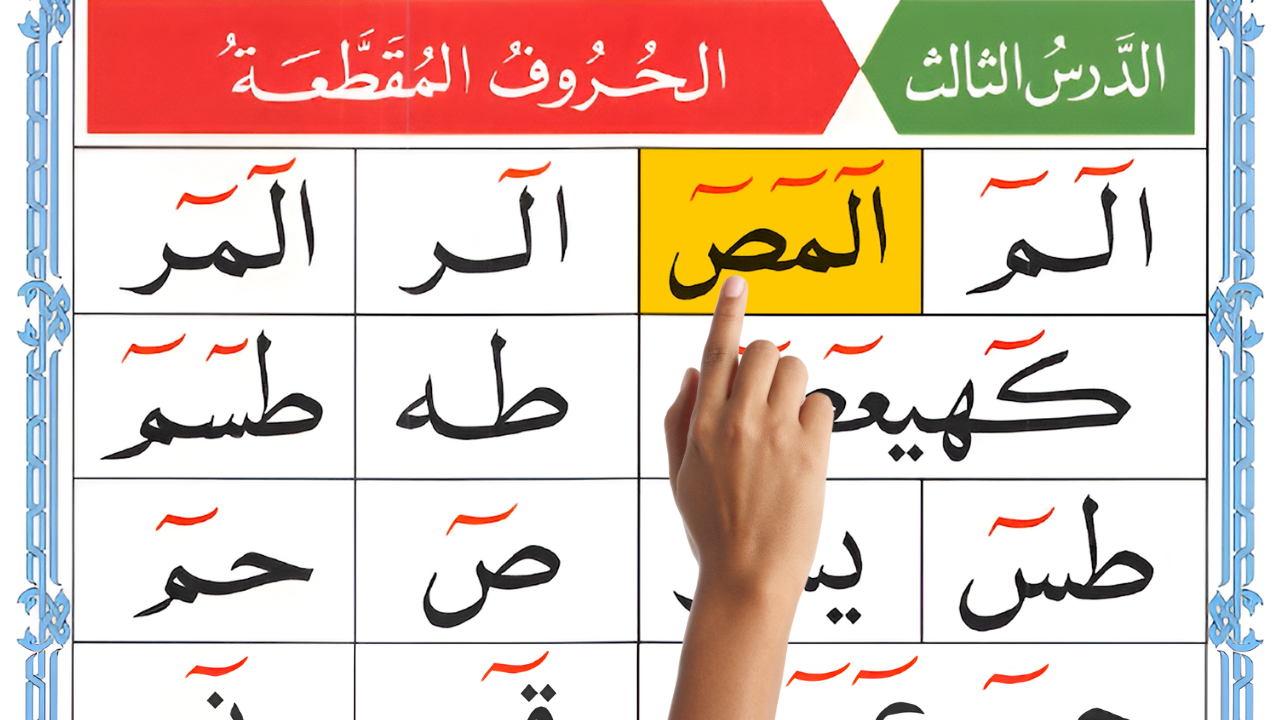
For example:
| Quranic Example | Pronunciation | Appears In |
|---|---|---|
| الم | Alif Laam Meem | Surah Al-Baqarah, Aal Imran, As-Sajdah |
| كهيعص | Kaaf Haa Yaa ‘Ayn Saad | Surah Maryam |
| طه | Taa Haa | Surah Taha |
| يس | Yaa Seen | Surah Yaseen |
| حم | Haa Meem | Surah Ghafir, Fussilat |
| ص | Saad | Surah Saad |
| ق | Qaaf | Surah Qaaf |
| ن | Noon | Surah Al-Qalam |
Linguistic and Spiritual Significance
The exact meaning of these letters is known only to Allah, but scholars agree they serve profound purposes in the Quran:
- They draw the listener’s attention at the beginning of Surahs.
- They emphasize the miraculous nature of the Quran — composed of ordinary Arabic letters, yet beyond human imitation.
- They remind believers that Allah’s knowledge surpasses human understanding.
These letters invite reflection, humility, and submission before the divine wisdom of the Quran.
Tajweed Rules for Huroof al-Muqatta’at
When reciting these letters, apply proper Tajweed. Each letter is recited separately, following the rules of Madd (prolongation), Makharij (articulation points), and Sifaat (qualities of letters).
| Opening letter(s) | Hafs reading guidance |
|---|---|
| Alif | Read its name without a Madd elongation. |
| ح ي ط ه ر | The two-letter opening names are lengthened two counts. |
| ن ق ص س ل ك م | These three-letter names contain Madd Lazim Harfi and are lengthened six counts. |
| ع | Four or six counts in Hafs via al-Shatibiyyah; follow your teacher consistently. |
Recite each opening-letter name according to its own rule. Alif has no Madd; not all opening letters are elongated equally.
Pronunciation Practice Examples
Try reading and repeating the following Quranic openings aloud:
| Surah | Huroof al-Muqatta’at | Correct Reading |
|---|---|---|
| Al-Baqarah | الم | Alif – Laam – Meem |
| Maryam | كهيعص | Kaaf – Haa – Yaa – ‘Ayn – Saad |
| Taha | طه | Taa – Haa |
| Yaseen | يس | Yaa – Seen |
| Ghafir | حم | Haa – Meem |
| Qaf | ق | Qaaf |
| Al-Qalam | ن | Noon |
Remember: do not connect these letters as a word — each is read individually.
Common Mistakes and How to Correct Them
| Mistake | Why It Happens | Correction |
|---|---|---|
| Reading letters too fast | Trying to connect them as a word | Recite each letter name distinctly without inventing pauses between connected letter names. |
| Missing elongation | Forgetting the Madd rule | Follow the letter-specific Madd rule: Alif has no Madd, some opening names have two counts and others six; ʿAyn has its own permitted timing. |
| Incorrect articulation | Ignoring Makharij | Practice throat and tongue positions |
| Reading with equal tone | Overlooking heavy/light rules | Apply Tafkheem for heavy letters like Saad, Qaaf, Taa |
| Mixing letters like Haa and Khaa | Weak airflow control | Focus on breath and clarity |
Step-by-Step Practice Plan
- Watch the video lesson and listen to each letter carefully.
- Repeat every letter slowly, maintaining the correct Madd length.
- Record your recitation and compare it with the teacher’s pronunciation.
- Write each letter group (الم, كهيعص, يس, حم) in your notebook.
- Revise daily for 10 minutes until you can recite them confidently.
Connection to Tajweed and Quran Recitation
Huroof al-Muqatta’at represent one of the earliest applications of Tajweed in Quranic recitation.
By mastering these letters, you improve your understanding of:
- Correct articulation (Makharij)
- Long vowels (Madd rules)
- Heavy and light letter sounds
- Pausing (Waqf) after separate letters
This lesson strengthens your foundation for future Tajweed rules and builds deep respect for Quranic pronunciation.
Practical Exercises
- Recite Surah Al-Baqarah’s beginning (الم) five times daily.
- Practice Surah Maryam’s opening (كهيعص) with slow rhythm.
- Compare Surah Taha (طه) and Surah Yaseen (يس) pronunciations.
- Read aloud while observing your mouth movements in a mirror.
- Listen to recitations by Qari Abdul Basit or Mishary Alafasy for reference.
Next Lesson – Harakaat (Fatha, Kasra, Damma)
Qaida Noorania Lesson 4 – Harakaat (Fatha, Kasra, Damma)
The next lesson will introduce you to Harakaat — the short vowel marks that bring sound and motion to Arabic letters.
You will learn how Fatha (َ), Kasra (ِ), and Damma (ُ) change pronunciation and help you read Arabic words smoothly.
More Lessons from Rasool Academy
- Qaida Noorania Lesson 1: Learn Arabic Alphabet (Alif Baa Taa)
- Qaida Noorania Lesson 2: Learn Arabic Joint Letters
- Qaida Noorania Lesson 3: Huroof e Muqattaat in Quran
- Qaida Noorania Lesson 4: Harakaat – Fatha, Kasra, Damma
- Qaida Noorania Lesson 5: Tanween – Double Fatha, Kasra & Damma
- Qaida Noorania Lesson 6: Harakaat & Tanween Practice
- Qaida Noorania Lesson 7: Alif Madd, Ya Madd & Waw Madd
- Qaida Noorania Lesson 8: Huroof al Madd & Huroof al Leen
- Qaida Noorania Lesson 9: Practice Tanween, Madd & Leen Letters
- Qaida Noorania Lesson 10: Sukoon Practice in Arabic
- Qaida Noorania Lesson 11: Sukoon in Quranic Words
- Qaida Noorania Lesson 12: Learn Shaddah (Tashdeed)
- Qaida Noorania Lesson 13: Shaddah in Quran – Complete Practice
- Qaida Noorania Lesson 14: Shaddah & Sukoon Combined Practice
- Qaida Noorania Lesson 15: Double Shaddah in One Word
- Qaida Noorania Lesson 16: Shaddah + Sukoon with Madd Letters
- Qaida Noorania Lesson 17: Final Exercises on All Previous Lessons

FAQ Section
Q1: What are Huroof al-Muqatta’at?
A: They are special disjointed letters appearing at the start of 29 Surahs in the Quran, recited individually.
Q2: Do these letters have meanings?
A: Their exact meanings are known only to Allah, but they carry deep linguistic and spiritual significance.
Q3: Can beginners learn to pronounce them easily?
A: Yes. With guidance, listening, and daily practice, even beginners can master these letters within days.
Conclusion and Dua
Learning Huroof al-Muqatta’at deepens your connection with the Quran.
It teaches humility — reminding us that Allah’s knowledge is infinite while ours is limited.
Recite these letters with respect, reflection, and sincerity. Every sound is an act of worship.
اللهم علمنا ما ينفعنا وانفعنا بما علمتنا وزدنا علما
O Allah, teach us what benefits us, benefit us from what You have taught us, and increase us in knowledge.
Opening-letter timing
These opening letters do not all have the same duration. Read Alif without Madd; the opening names in ح ي ط ه ر have two counts, and ن ق ص س ل ك م have six. The opening ʿAyn permits four or six counts in Hafs via al-Shatibiyyah. Follow a teacher’s model rather than elongating every name for two counts. See the opening-letter Madd explanation.