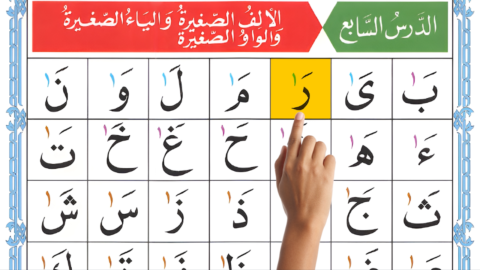
Qaida Noorania Lesson 4 | Learn Short Arabic Vowels (Harakat)
Welcome to Rasool Academy’s Qaida Noorania Lesson 4, where you will begin learning the Harakat (Arabic short vowels) —
Fatha (َ), Kasra (ِ), and Damma (ُ).
These three vowel marks are the soul of Arabic pronunciation and the foundation of Tajweed.
After learning how to connect Arabic letters in Lesson 2 and exploring the mysterious Huroof al-Muqatta’at in Lesson 3, you are now ready to bring the letters to life with sound.
Harakat make short vowels explicit for learners. Experienced Arabic readers can also read unvowelled text using grammar and context.
At Rasool Academy, our aim is to help learners of all levels read the Quran clearly, confidently, and beautifully with Tajweed.
Watch Full Qaida Noorania Lesson 4
Before reading further, follow these steps:
- Listen carefully to each Harakah (vowel mark) pronounced by the teacher.
- Repeat each example three times.
- Focus on mouth shape and tongue movement.
Listening before reading helps you grasp correct articulation (Makharij) and rhythm.
Lesson Overview
In this fourth lesson of the Qaida Noorania Arabic Course (Version 01), you will learn:
- The three main Harakat: Fatha, Kasra, and Damma.
- How they change the sound of Arabic letters.
- How to recognize Harakat in Quranic writing.
- Correct Tajweed pronunciation for each vowel.
- Practice words using all three vowels.
Goal: Be able to read any Arabic letter with its proper short vowel confidently.
What Are Harakat?
Harakat (حركات) are short vowel marks written above or below letters to indicate pronunciation.

They are not separate letters — they are small signs that guide how a letter should be read.
| Harakah | Symbol | Position | Sound | Example |
|---|---|---|---|---|
| Fatha | َ | Above the letter | “a” sound | بَ = ba |
| Kasra | ِ | Below the letter | “i” sound | بِ = bi |
| Damma | ُ | Above the letter | “u” sound | بُ = bu |
Each Harakah changes how a letter sounds while keeping the same base consonant.
Examples with Different Letters
| Letter | With Fatha | With Kasra | With Damma |
|---|---|---|---|
| ب | بَ (ba) | بِ (bi) | بُ (bu) |
| ت | تَ (ta) | تِ (ti) | تُ (tu) |
| د | دَ (da) | دِ (di) | دُ (du) |
| س | سَ (sa) | سِ (si) | سُ (su) |
| م | مَ (ma) | مِ (mi) | مُ (mu) |
As you can see, the same letter changes sound depending on the Harakah mark.
Understanding Each Harakah in Detail
1. Fatha (َ)
- A small diagonal stroke above the letter.
- Produces a short “a” sound, as in بَ = ba.
- Open the mouth for a short Fathah while keeping each consonant’s own articulation point.
- Common in words like حمد (Hamd), كتاب (Kitaab).
2. Kasra (ِ)
- A small diagonal stroke below the letter.
- Produces a short “i” sound, as in بِ = bi.
- Pronounce a short Kasrah without turning it into a long ī sound.
- Found in words like بسم (Bism), علم (Ilm).
3. Damma (ُ)
- A small curl-like symbol above the letter.
- Produces a short “u” sound, as in بُ = bu.
- Lips rounded forward; sound comes softly from lips.
- Seen in words like رسول (Rasool), كتب (Kutub).
Importance of Harakat in Quran Reading
Without Harakat, Arabic text can have multiple meanings and pronunciations.
Harakat ensure accurate reading, preserving the meaning of Allah’s words.
| Word (no marks) | With Harakah | Meaning |
|---|---|---|
| كتب | كَتَبَ | He wrote |
| كتب | كُتِبَ | It was written |
| كتب | كُتُبٌ | Books |
Just a small change in the vowel mark can completely alter meaning — showing how precise Tajweed is.
Common Mistakes and How to Fix Them
| Mistake | Cause | Correction |
|---|---|---|
| Mixing Fatha and Kasra | Unclear tongue position | Keep “a” open, “i” narrow |
| Not rounding lips in Damma | Weak articulation | Round lips slightly forward |
| Reading vowels too long | Overstretching | Keep short vowels brief |
| Ignoring Harakat | Skipping marks | Read every Harakah carefully |
| Starting from left to right | English habit | Always read right to left |
Step-by-Step Practice Plan
- Practice each Harakah separately for all 28 Arabic letters.
- Read aloud three times: once slowly, once normally, and once fluently.
- Write down every letter with its three Harakat in a notebook.
- Recite small Quranic words using these vowels.
- Listen to the video lesson daily for at least 10 minutes.
Consistency is key — practice daily to make your recitation natural and confident.
Tajweed Connection
Harakat are the foundation of Tajweed because they control how long and how clearly each sound is pronounced.
Later, when you learn Tanween, Madd, and Sukoon, these Harakat will guide your rhythm and flow.
Once you master Fatha, Kasra, and Damma, you will be ready to recite short Quranic verses accurately.
Practical Exercises
Try reading the following sets aloud:
Set 1: بَ بِ بُ — تَ تِ تُ — سَ سِ سُ
Set 2: مَ مِ مُ — نَ نِ نُ — رَ رِ رُ
Set 3: كَ كِ كُ — لَ لِ لُ — فَ فِ فُ
Next, combine them into short Quranic-style words:
بَسَمَ, نَصَرَ, كِتَاب, رَسُول, حَمَدَ
Read slowly, maintaining the correct vowel sound.
Connection to Quranic Examples
| Word | Translation | Harakat Pattern |
|---|---|---|
| بِسْمِ اللَّهِ | In the name of Allah | Kasrah in بِسْمِ; read each consonant and vowel as written. |
| رَحْمَن | The Most Merciful | Fatha + Sukoon |
| كُتِبَ | It was written | Damma + Kasra + Fatha |
| قُلْ | Say | Damma + Sukoon |
| نَصَرَ | He helped | Fatha + Fatha + Fatha |
Understanding Harakat will help you decode thousands of Quranic words easily.
Next Lesson – Tanween (Double Fatha, Kasra, Damma)
Qaida Noorania Lesson 5 – Tanween (Double Fatha, Kasra, Damma)
The next lesson will introduce you to Tanween, the double vowel marks (ً ٍ ٌ) that create the “an, in, un” sounds in Arabic.
You will learn how Tanween adds rhythm and flow to Quranic recitation.
More Lessons from Rasool Academy
- Qaida Noorania Lesson 1: Learn Arabic Alphabet (Alif Baa Taa)
- Qaida Noorania Lesson 2: Learn Arabic Joint Letters
- Qaida Noorania Lesson 3: Huroof e Muqattaat in Quran
- Qaida Noorania Lesson 4: Harakaat – Fatha, Kasra, Damma
- Qaida Noorania Lesson 5: Tanween – Double Fatha, Kasra & Damma
- Qaida Noorania Lesson 6: Harakaat & Tanween Practice
- Qaida Noorania Lesson 7: Alif Madd, Ya Madd & Waw Madd
- Qaida Noorania Lesson 8: Huroof al Madd & Huroof al Leen
- Qaida Noorania Lesson 9: Practice Tanween, Madd & Leen Letters
- Qaida Noorania Lesson 10: Sukoon Practice in Arabic
- Qaida Noorania Lesson 11: Sukoon in Quranic Words
- Qaida Noorania Lesson 12: Learn Shaddah (Tashdeed)
- Qaida Noorania Lesson 13: Shaddah in Quran – Complete Practice
- Qaida Noorania Lesson 14: Shaddah & Sukoon Combined Practice
- Qaida Noorania Lesson 15: Double Shaddah in One Word
- Qaida Noorania Lesson 16: Shaddah + Sukoon with Madd Letters
- Qaida Noorania Lesson 17: Final Exercises on All Previous Lessons

FAQ
Q1: What are Harakat used for in Arabic?
A: Harakat are short vowel marks that guide pronunciation and meaning in Quranic and Arabic reading.
Q2: Do Harakat appear in every Arabic text?
A: No. They are mostly used in Quran, beginner books, and texts for non-native learners.
Q3: How long should I hold each vowel sound?
A: Harakat are short vowels, held for one beat only.
Q4: Can I recite Quran without Harakat?
A: Not recommended for beginners. Harakat help avoid mispronunciation and mistakes in meaning.
Conclusion and Dua
Learning Harakat is the most important step toward fluent Quran reading.
These small marks transform unvowelled letters into beautiful recitation.
Mastering Fatha, Kasra, and Damma builds the base for all future Tajweed rules.
May Allah bless your efforts and make the Quran easy and beloved to your heart.
اللهم اجعل القرآن ربيع قلوبنا ونور صدورنا
O Allah, make the Quran the spring of our hearts and the light of our souls.