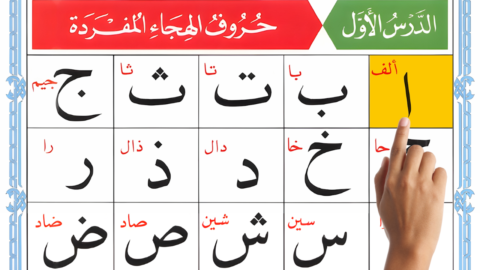
Qaida Noorania Lesson 12 | Learn Shaddah in Arabic with Tajweed
Welcome to Qaida Noorania Lesson 12, where you’ll learn how to read and pronounce the Arabic mark called Shaddah (ّ), also known as Tashdeed (التشديد).
This mark tells you to stress a letter twice, once without a vowel and once with a vowel sound.
Learning this rule makes your Quranic recitation clearer and more beautiful.
Watch the Video Lesson
Before you start:
- Listen closely to how each Shaddah letter is stressed twice.
- Repeat slowly after the teacher.
- Shaddah doubles the consonant; it is not a long vowel. Doubled Noon and Mīm also require Ghunnah. Give each consonant its proper duration without an artificial pause.
What Is Shaddah (ّ)?
Shaddah means “doubling or strengthening.”
When you see this symbol above a letter, it means that letter is read twice —
first with Sukoon (ْ) and then with a Harakah (َ ِ ُ).

Example:
| With Shaddah | Hidden Form | Pronunciation |
|---|---|---|
| بَّ | بْبَ | bba |
| بِّ | بْبِ | bbi |
| بُّ | بْبُ | bbu |
A Shaddah represents two identical consonants: the first without a vowel and the second vowelled. Give it its full sound without a separate pause.
Why Learning Shaddah Matters
Understanding Shaddah is essential because it changes both the sound and the meaning of words.
| Without Shaddah | With Shaddah | Meaning |
|---|---|---|
| رَبَ | رَبَّ | Lord |
| مَدَ | مَدَّ | He extended |
| حَقَ | حَقَّ | Truth (confirmed) |
A small Shaddah mark can completely change a word’s sense in the Quran, so accuracy matters deeply.
How to Pronounce Shaddah Correctly
- Look for the Shaddah mark on a letter.
- Form the doubled consonant clearly: its first part has no vowel, and its second part carries the written vowel.
- Release the sound with a Harakah (vowel).
- Keep your voice steady — don’t rush to the next letter.
Example: رَبَّ = “Rabba” (hold the B then release).
Practice Words with Shaddah
| Word | Transliteration | Meaning |
|---|---|---|
| رَبَّ | Rabba | Lord |
| مَدَّ | Madda | He stretched |
| شَدَّ | Shadda | He pulled |
| نَصَّ | Nassa | He stated |
| صَبَّ | Sabba | He poured |
| حَقٌّ | Haqq-un | Truth |
Practice these words daily until the doubling feels natural.
Shaddah with Different Vowels
| Harakah | Example | Transliteration | Meaning |
|---|---|---|---|
| Fatha (َ) | مَدَّ | Madda | He extended |
| Kasra (ِ) | رَبِّ | Rabbi | My Lord |
| Damma (ُ) | يُحِبُّ | Yuhibbu | He loves |
The Shaddah always doubles the letter, no matter which Harakah appears.
Shaddah in Quranic Examples
| Word | Translation | Surah Reference |
|---|---|---|
| إِيَّاكَ | You alone | Al-Fātiḥah 1:5 |
| إِنَّا | Indeed We | Al-Kawthar 108:1 |
| رَبَّنَا | Our Lord | Al-Baqarah 2:286 |
| أَشَدُّ | Stronger | Al-Baqarah 2:165 |
| حَقٌّ | Truth | Al-Kahf 18:21 |
Listen to each example from the video and imitate the teacher’s tone and stress.
Common Mistakes and Corrections
| Mistake | Cause | Correction |
|---|---|---|
| Ignoring the double sound | Reading too fast | Give the doubled consonant its full duration without inserting a pause or an extra vowel. |
| Over-stretching sound | Confusing with Madd | Short stress only |
| Mixing heavy & light letters | Weak articulation | Review Makharij (pronunciation points) |
| Skipping Shaddah | Visual inattention | Mark and highlight each Shaddah word |
Daily Practice Routine
- Read five Shaddah words each day aloud.
- Record and compare your voice to the lesson video.
- Alternate between simple and Quranic examples.
- Revise previous Sukoon lesson before starting.
Within a week, your recitation will sound stronger and more balanced.
Connection to Tajweed
Shaddah is not only a sign of stress but also a gateway to several Tajweed rules like Idgham, Ghunna, and Tafkheem.
Mastering Shaddah helps you read with rhythm and confidence — essential for fluent Quran reading.
Next Lesson – Advanced Shaddah Practice
Qaida Noorania Lesson 13 – Advanced Shaddah Practice
In Lesson 13, you’ll move to advanced Tashdeed exercises using real Quranic verses and words with Madd and Sukoon.
It will strengthen your control and prepare you for full Tajweed application.
More Lessons from Rasool Academy
- Qaida Noorania Lesson 1: Learn Arabic Alphabet (Alif Baa Taa)
- Qaida Noorania Lesson 2: Learn Arabic Joint Letters
- Qaida Noorania Lesson 3: Huroof e Muqattaat in Quran
- Qaida Noorania Lesson 4: Harakaat – Fatha, Kasra, Damma
- Qaida Noorania Lesson 5: Tanween – Double Fatha, Kasra & Damma
- Qaida Noorania Lesson 6: Harakaat & Tanween Practice
- Qaida Noorania Lesson 7: Alif Madd, Ya Madd & Waw Madd
- Qaida Noorania Lesson 8: Huroof al Madd & Huroof al Leen
- Qaida Noorania Lesson 9: Practice Tanween, Madd & Leen Letters
- Qaida Noorania Lesson 10: Sukoon Practice in Arabic
- Qaida Noorania Lesson 11: Sukoon in Quranic Words
- Qaida Noorania Lesson 12: Learn Shaddah (Tashdeed)
- Qaida Noorania Lesson 13: Shaddah in Quran – Complete Practice
- Qaida Noorania Lesson 14: Shaddah & Sukoon Combined Practice
- Qaida Noorania Lesson 15: Double Shaddah in One Word
- Qaida Noorania Lesson 16: Shaddah + Sukoon with Madd Letters
- Qaida Noorania Lesson 17: Final Exercises on All Previous Lessons

FAQ
Q1: What is Shaddah in Arabic?
→ It is a sign that shows you must pronounce a letter twice with stress.
Q2: Is Shaddah same as Madd?
→ No, Shaddah is emphasis (stress), Madd is elongation (stretch).
Q3: How can kids practice Shaddah easily?
→ Repeat after video lessons, use mirror pronunciation, and read aloud daily.
Conclusion
Learning Shaddah builds the foundation of true Tajweed.
It teaches you balance between sound and silence, and how to recite with beauty and accuracy.
Keep practicing until your tongue flows naturally with each stress sound.
اللهم اجعل القرآن ربيع قلوبنا ونور صدورنا
O Allah, make the Quran the spring of our hearts and the light of our souls.