Noorani Qaida Full Course | Learn Quran Reading with Tajweed
Learning to read the Qur’an correctly is one of the most rewarding journeys a Muslim can begin. But proper Quran reading does not start with Surahs — it starts with foundation. That foundation is Noorani Qaida.
This Noorani Qaida Full Course guide is a complete roadmap covering Lessons 1 through 17, designed to help beginners, children, new Muslims, and adults learn Quran reading with Tajweed step by step.
If you are searching for:
- Noorani Qaida full course
- Learn Quran reading for beginners
- Tajweed basics step by step
- How to read Quran correctly
This master guide will walk you through everything in structured detail.
🎥 Watch the Complete Noorani Qaida Full Course (All Lessons)
You can follow all 17 lessons in order for structured learning.
Why Noorani Qaida Is Essential Before Reading the Qur’an
The Qur’an was revealed with precise pronunciation. Tajweed is not optional decoration — it preserves meaning and protects the integrity of divine speech.
Noorani Qaida trains:
- Letter recognition
- Articulation accuracy (Makharij)
- Vowel control
- Nasal discipline
- Elongation timing
- Consonant strength
- Fluency rhythm
Without this foundation, Quran reading becomes unstable and error-prone.
Complete Lesson Breakdown (1–17)
Below is a deep explanation of every lesson in the Noorani Qaida course.
Lesson 1 – Arabic Alphabet (Isolated Letters)
🎥 Watch Lesson 1
Lesson 1 introduces all 28 Arabic letters individually.
Core focus:
- Letter recognition
- Correct articulation points
- Differentiating similar letters
- Strong pronunciation foundation
Makharij training begins here. Without correct articulation at this stage, every later lesson becomes difficult.
Psychological impact:
Students gain confidence as they identify letters clearly.
Lesson 2 – Joint Letters (Connected Forms)
🎥 Watch Lesson 2
Arabic letters change shape when connected.
Lesson 2 teaches:
- Beginning, middle, end forms
- Letter connection rules
- Visual scanning improvement
Students transition from isolated letters to reading real word structures.
Lesson 3 – Huroof Muqatta’at
🎥 Watch Lesson 3
Special disconnected letters found at the beginning of certain Surahs.
Lesson 3‘s Focus:
- Unique pronunciation
- Quranic recognition
- Sound stability
This builds awareness of Quran-specific letter patterns.
Lesson 4 – Harakat (Short Vowels)
🎥 Watch Lesson 4
Lesson 4 Introduces:
- Fatha
- Kasra
- Damma
These vowels create movement in letters.
Students learn timing control and avoid overstretching.
This is the beginning of real reading.
Lesson 5 – Tanween (Double Vowels)
🎥 Watch Lesson 5
Lesson 5: Tanween introduces nasal sound endings.
Students learn:
- Fathatain
- Kasratain
- Dammatain
- Soft nasal control
This strengthens airflow discipline.
Lesson 6 – Harakat & Tanween Practice
🎥 Watch Lesson 6
Lesson 6: Structured drills combining short vowels and Tanween.
Goal:
- Smooth transitions
- Rhythm control
- Fluency building
This lesson moves from theory to application.
Lesson 7 – Standing Fatha, Kasra & Damma (Long Vowels)
🎥 Watch Lesson 7
Lesson 7: Introduction to long vowels (basic Madd).
Students learn:
- Alif elongation
- Waw elongation
- Ya elongation
- Two-count timing discipline
This builds recitation rhythm.
Lesson 8 – Madd & Leen Letters
🎥 Watch Lesson 8
Lesson 8 differentiates between:
- Madd (full elongation)
- Leen (soft glide sounds)
Students learn contrast between stretching and softness.
This sharpens listening ability.
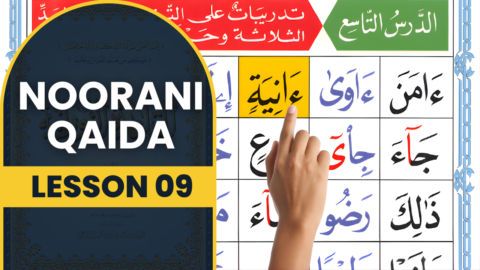
Lesson 9 – Practice Tanween, Madd & Leen in Words
🎥 Watch Lesson 9
Lesson 9: Rule integration begins.
Students apply:
- Nasal endings
- Long vowels
- Soft glide sounds
Inside real Quranic-style words.
Fluency improves significantly here.
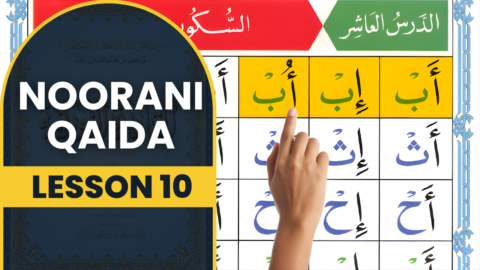
Lesson 10 – Learn Sukoon Pronunciation
🎥 Watch Lesson 10
Lesson 10 introduces consonants without a following short vowel. Sukoon is not an instruction to pause within every word.
Students learn:
- No vowel means no hidden sound
- Clear articulation
- Avoid inserting extra vowels
This strengthens consonant clarity.
Lesson 11 – Practice Sukoon in Quranic Words
🎥 Watch Lesson 11
Lesson 11: Advanced Sukoon drills.
Focus:
- Consonant clusters
- Smooth transitions
- Breath control
Fluency deepens.
Lesson 12 – Learn Shaddah (Tashdeed)
🎥 Watch Lesson 12
Lesson 12: Shaddah doubles consonants.
Students learn:
- Hidden Sukoon + vowel release
- Emphasis without exaggeration
- Strengthening articulation
Meaning clarity improves.
Lesson 13 – Practice Tashdeed in Words
🎥 Watch Lesson 13
Lesson 13: Shaddah inside full words.
Focus:
- Word-level fluency
- Balanced timing
- Avoiding overemphasis
Confidence increases significantly.
Lesson 14 – Practice Shaddah & Sukoon Together
🎥 Watch Lesson 14
Lesson 14: Advanced coordination.
Students apply:
- Consonant doubling
- Unvowelled letters
- Smooth transitions
This is a fluency milestone.
Lesson 15 – Practice Double Shaddah
🎥 Watch Lesson 15
Lesson 15: Two Shaddah in one word.
Focus:
- Consonant endurance
- Rhythm stability
- Controlled emphasis
Advanced articulation training begins here.
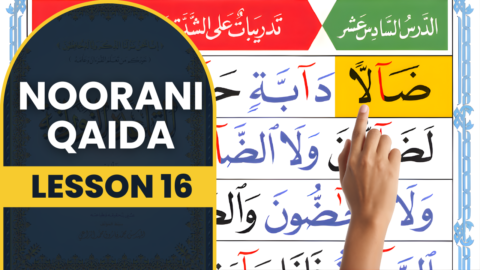
Lesson 16 – Practice Madd & Shaddah Together
🎥 Watch Lesson 16
Lesson 16: Integration of:
- Elongation
- Consonant doubling
Students learn balance between stretching and strengthening.
This builds expressive recitation.
Lesson 17 – Final Tajweed Practice
🎥 Watch Lesson 17
Lesson 17: Comprehensive revision.
All rules combined:
- Harakat
- Tanween
- Madd
- Leen
- Sukoon
- Shaddah
Students transition from Qaida to Quran reading readiness.
Who Is This Noorani Qaida Course For?
- Children beginning Arabic
- Adults starting from zero
- New Muslims
- Anyone correcting Tajweed
- Parents teaching at home
No prior Arabic knowledge required.
How Long Does It Take to Complete Noorani Qaida?
With consistent daily practice:
Study for a manageable period each day and move on when you can read accurately. Completion time varies; a teacher’s feedback is more useful than a fixed deadline.
Consistency matters more than speed.
How to Study Noorani Qaida Effectively
- Follow lessons in order
- Repeat aloud daily
- Focus on clarity before speed
- Record and self-evaluate
- Maintain steady rhythm
What Happens After Completing Noorani Qaida?
After Lesson 17, students should:
- Begin reading short Surahs
- Apply Tajweed consciously
- Continue fluency practice
- Increase reading duration gradually
Noorani Qaida is the foundation — the Qur’an is the application.
Why Learn with Rasool Academy?
At Rasool Academy:
- English-guided explanations
- Slow, clear pronunciation
- Visual clarity
- Structured progression
- Beginner-friendly teaching
Our goal is confidence, clarity, and correctness.

Frequently Asked Questions
1. What is Noorani Qaida?
Noorani Qaida is a beginner’s book designed to teach Quran reading step by step with proper Tajweed. It starts from the Arabic alphabet and gradually introduces vowels, elongation rules, Sukoon, Shaddah, and advanced pronunciation patterns.
2. How long does it take to complete the Noorani Qaida full course?
Study for a manageable period each day and move on when you can read accurately. Completion time varies; a teacher’s feedback is more useful than a fixed deadline.
3. Is Noorani Qaida necessary before reading the Quran?
A sound foundation in letter sounds and reading rules is important. Noorani Qaida is one way to learn it; learners who already have these skills can follow an appropriate alternative with a qualified teacher.
4. Can adults learn Noorani Qaida from zero?
Absolutely. Noorani Qaida is designed for beginners of all ages. Many adults and new Muslims successfully start Quran reading through this structured system.
5. What is the difference between Noorani Qaida and Tajweed?
Noorani Qaida is the structured learning book.
Tajweed is the science of correct pronunciation.
Noorani Qaida teaches Tajweed practically from the beginning.
6. What comes after completing Noorani Qaida?
After finishing all 17 lessons, learners should begin reading short Surahs from the Quran while applying Tajweed rules consciously. Continuous fluency practice is recommended.
7. Is this Noorani Qaida course suitable for children?
Yes. The structured progression and repetition method make it ideal for children starting Arabic and Quran reading.
8. How can I improve faster while studying Noorani Qaida?
- Practice daily
- Repeat aloud
- Focus on clarity before speed
- Record your recitation
- Review difficult rules regularly
Consistency is more important than speed.
9. Do I need a teacher to learn Noorani Qaida?
A qualified teacher is always recommended for correcting pronunciation. However, structured video lessons with clear guidance can support self-learning effectively.
10. Why is Tajweed important in Quran reading?
Tajweed preserves the exact pronunciation revealed to Prophet Muhammad ﷺ. Incorrect pronunciation can change the meaning of words, so Tajweed ensures accuracy and respect for divine speech.
Final Words
Noorani Qaida is not just a beginner’s booklet. It is the structured gateway to Quran reading with Tajweed.
Mastering Lessons 1–17 builds:
- Articulation strength
- Vowel control
- Nasal discipline
- Elongation timing
- Fluency confidence
With dedication and sincerity, every learner can read the Qur’an correctly.
May Allah grant clarity, fluency, and immense reward in every letter recited from His Book.