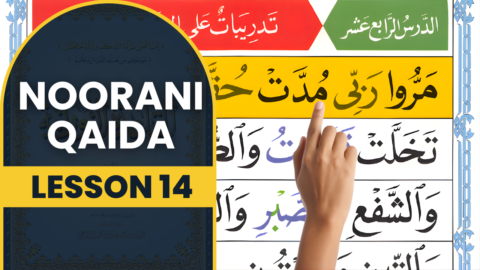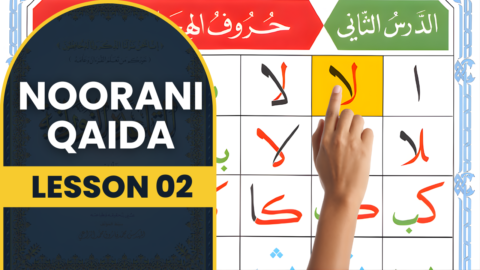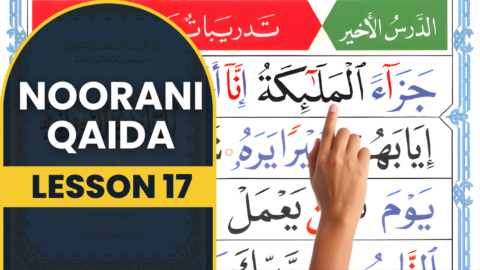
Noorani Qaida Lesson 6 | Practice Harakat & Tanween with Tajweed
Noorani Qaida Lesson 6 is a structured practice lesson that combines Harakat (short vowels) and Tanween (double vowels) into guided reading drills. After learning individual vowel sounds in Lesson 4 and Tanween rules in Lesson 5, students now enter the application stage.
This lesson is designed to strengthen pronunciation rhythm, improve nasal control, and develop early fluency in Quran reading.
At Rasool Academy, our English-guided Version 02 makes this stage clear and beginner-friendly through step-by-step repetition and visual support.
🎥 Watch the Noorani Qaida Lesson 6 – Harakat & Tanween Practice
Follow slowly and repeat each pattern carefully.
What Is Noorani Qaida Lesson 6 About?
Lesson 6 focuses on:
- Combining short vowels and double vowels
- Improving sound transition
- Strengthening Tanween nasal control
- Developing reading rhythm
- Building early fluency
This lesson does not introduce a new rule.
It trains the learner to apply previously learned rules smoothly.
Lesson Overview
Book: Noorani Qaida
Lesson Number: 6
Topic: Harakat & Tanween Combined Practice
Language: English-guided Arabic
Version: 02 – for Non-Arabic Learners
Teacher: Qari Rafiqul Islam
Learning Level: Beginner (Fluency Development Stage)
Target Group: Children, adults, and new Muslims
Review of Harakat (Short Vowels)
Harakat are short vowel marks:
- Fatha (َ) – short “a”
- Kasra (ِ) – short “i”
- Damma (ُ) – short “u”
They turn letters into readable syllables:
بَ – Ba
بِ – Bi
بُ – Bu
Important principle:
Harakat must remain short and controlled.
Review of Tanween (Double Vowels)
Tanween produces a light nasal ending:
- Fathatain (ً) – “an”
- Kasratain (ٍ) – “in”
- Dammatain (ٌ) – “un”
Examples:
بًا – Ban
بٍ – Bin
بٌ – Bun
Tanween adds a soft nasal resonance. It must not be exaggerated or stretched.

Why Lesson 6 Is Critical
Many learners can pronounce Harakat and Tanween individually. But when both appear together in reading drills, confusion often happens.
Lesson 6 builds:
- Quick vowel recognition
- Smooth sound transition
- Nasal control discipline
- Consistent reading rhythm
This lesson transforms isolated pronunciation into flowing reading.
Structured Practice Patterns in Lesson 6
Common drill patterns include:
بَ تَ ثَ جَ
بًا تًا ثًا جًا
بِ تِ ثِ جِ
بٍ تٍ ثٍ جٍ
بُ تُ ثُ جُ
بٌ تٌ ثٌ جٌ
These patterns train:
- Eye movement speed
- Tongue flexibility
- Nasal timing
- Confidence in switching vowel sounds
Repetition builds automatic pronunciation.
Deep Fluency Training in Lesson 6
1️⃣ Sound Transition Control
Moving from:
بَ → بًا
تِ → تٍ
دُ → دٌ
Requires immediate adjustment of airflow and nasal tone.
This builds mental flexibility in reading.
2️⃣ Nasal Discipline
Tanween must be:
- Audible
- Soft
- Short
Common mistakes:
❌ Overstretching nasal sound
❌ Completely ignoring nasal tone
❌ Turning Tanween into Madd
Correction:
Keep the nasal sound light and controlled.
3️⃣ Rhythm and Timing
Short vowels must stay short.
Tanween must not become long.
Lesson 6 develops balanced pacing.
Without rhythm control, later Tajweed rules become difficult.
Common Mistakes in Lesson 6
- Confusing short vowels with long vowels
- Rushing through drills
- Ignoring nasal sound
- Overstretching Fatha
- Reading without consistent rhythm
Slow repetition corrects these issues.
Step-by-Step Study Method
- Read each row slowly.
- Focus on vowel accuracy.
- Switch smoothly between Harakat and Tanween.
- Repeat each pattern 5–10 times.
- Practice daily for 10–15 minutes.
Consistency builds fluency.
How Lesson 6 Prepares for Future Lessons
Mastering Lesson 6 prepares learners for:
- Sukoon (unvowelled letters)
- Shaddah (double consonants)
- Madd (long vowels)
- Word-level Quran reading
If Harakat and Tanween are weak, advanced Tajweed becomes difficult.
Who This Lesson Is For
- Beginners learning Quran reading
- Children practicing vowel control
- Adults starting from zero
- Non-Arabic speakers
This lesson is especially important for learners who struggle with rhythm.

Continue Learning – Complete Noorani Qaida Course
Frequently Asked Questions
Q. Is Lesson 6 a new rule lesson?
No, it is a structured practice lesson.
Q. Why is Tanween difficult?
Because nasal control requires precision.
Q. How long should I practice?
10–15 minutes daily is ideal.
Q. Can children master this easily?
Yes, with consistent repetition.
Summary of Key Points
- Lesson 6 combines Harakat and Tanween.
- Focus is on application, not theory.
- Nasal control must be soft and balanced.
- Short vowels must remain short.
- Repetition builds fluency.
Conclusion
Noorani Qaida Lesson 6 is a foundational fluency-building stage. By practicing Harakat and Tanween together, learners strengthen pronunciation control, rhythm stability, and reading confidence.
Mastering this lesson ensures smooth progress toward advanced Tajweed rules and Quran reading.
May Allah grant clarity and ease in learning His Book.