Noorani Qaida Lesson 1 | Learn Arabic Alphabet Pronunciation
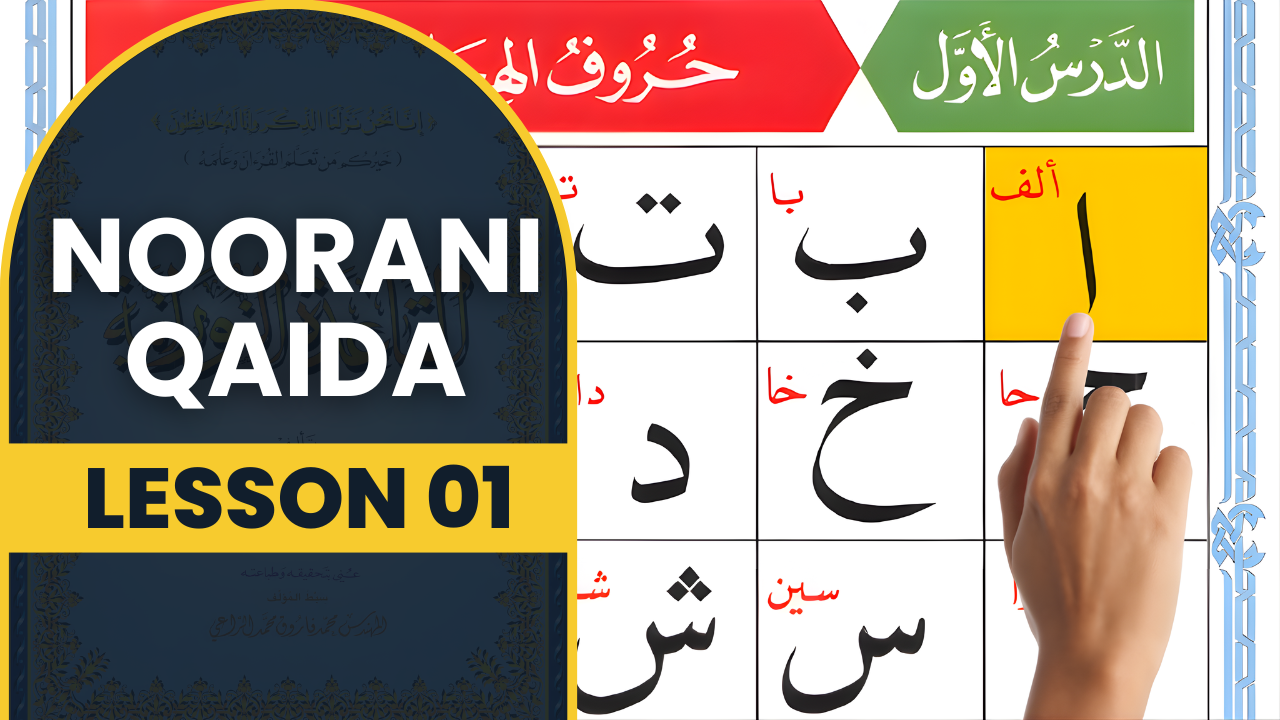
Noorani Qaida Lesson 1 is the first step in learning to read the Holy Qur’an. This lesson introduces the Arabic alphabet, beginning with the letter Alif, and helps learners recognize the basic shapes and sounds of Arabic letters. It builds the essential foundation for correct pronunciation, fluency, and Tajweed in Quran recitation.
At Rasool Academy, we make Quran learning simple, structured, and spiritually uplifting. Our goal is to guide beginners through clear visuals, slow recitation, and step-by-step explanations that make learning Arabic easy and enjoyable. This course is designed especially for non-Arabic speakers, including kids, new Muslims, and adults who want to start reading the Qur’an correctly from the beginning.
In this English-guided version of the Noorani Qaida course, every lesson includes on-screen English pronunciation cues and lower-third visuals that follow the teacher’s recitation. These visual guides help learners connect the Arabic sounds they hear with the English transliteration they see, making it easier to understand, remember, and pronounce every letter—from Alif to Ya—with confidence and clarity.
Watch the Noorani Qaida Lesson 1
You can watch the complete Lesson 1 video on the Rasool Academy YouTube channel to follow along with the pronunciation and visuals.
What This Lesson Covers
Noorani Qaida Lesson 1 teaches all 28 Arabic letters (huruf al-hijaa), from Alif to Ya. The lesson focuses on three main aspects: recognizing the shape of each letter, learning the correct pronunciation from its articulation point (Makharij), and differentiating between letters that look similar but sound different.
By mastering these elements, learners establish the foundation required to read Arabic words fluently and apply Tajweed rules accurately in later stages.
Lesson Overview
Book: Noorani Qaida
Lesson Number: 1
Topic: Arabic Alphabet (Isolated Letters)
Language: English-guided Arabic
Version: 02 – for Non-Arabic Learners
Teacher: Qari Rafiqul Islam
Student: Sumaiya Islam
Learning Level: Beginner
Target Group: Children, new Muslims, and non-Arabic speakers
Step-by-Step Learning Focus
Recognizing Arabic Letters
Arabic letters are artistic and meaningful. Each one has a unique shape and position in the Arabic script. In Lesson 1, students learn to identify the letters individually (for example, Alif, Ba, Ta, Tha, and so on). This recognition is essential before joining letters into words.
Understanding Makharij (Pronunciation Points)
Arabic sounds come from specific points in the mouth and throat called Makharij. Learning these early ensures that every letter is spoken correctly and distinctly. For instance:
- The letter Ha (ح) is produced from the middle of the throat.
- The letter Kha (خ) comes from the upper throat.
- The letter Meem (م) is pronounced by closing the lips.
When learners practice each sound slowly and carefully, they build strong pronunciation habits that last a lifetime.
Differentiating Similar Letters
Some Arabic letters look almost the same but differ in sound and dot placement. For example, Ba (ب), Ta (ت), and Tha (ث) differ only in the number and position of their dots. Recognizing these small differences avoids confusion and builds accuracy in reading.
Repetition and Listening
The lesson encourages learners to listen carefully to the teacher’s voice and repeat after every letter. This repetition improves pronunciation and helps the learner remember the correct sound automatically.
Teaching Approach at Rasool Academy
Rasool Academy follows a calm and step-by-step teaching approach designed for beginners:
- Slow Recitation – Each letter is pronounced slowly to make its sound clear and distinct.
- Visual Learning – Large, clear letters are shown to reinforce shape recognition.
- Repetition and Practice – Learners are encouraged to repeat each letter multiple times.
- Focus on Purity – No background music or distracting effects are used, ensuring a peaceful and spiritual learning experience.
This combination of clarity, repetition, and visual learning helps children and adults develop confidence and fluency without confusion.
Who Can Learn from This Lesson
Lesson 1 is designed for everyone who wants to start learning Arabic or reading the Qur’an from the beginning. It is especially suitable for:
- Children who are starting their first Arabic or Quran class.
- Adults who have never learned Arabic before.
- New Muslims who wish to read the Qur’an correctly.
- Parents who want to teach their children at home.
Regardless of age, this lesson removes fear and builds a sense of excitement about learning the language of the Qur’an.
The Importance of Mastering the Arabic Alphabet
Learning the Arabic alphabet correctly is essential for Tajweed. Every letter of the Qur’an has its unique sound, and changing that sound may change the meaning. For example, confusing the letter Thal (ذ) with Zay (ز) can alter the word’s meaning completely.
By learning the exact articulation of each letter, learners preserve the purity of the Qur’an’s words and fulfill the responsibility of reciting it as it was revealed.
The Prophet Muhammad (peace be upon him) said:
“Whoever recites a letter from the Book of Allah will have a reward, and the reward will be multiplied ten times.” (Tirmidhi)
Even learning and reciting a single letter brings spiritual reward, and mastering them all is a lifelong blessing.
Practical Study Tips
- Set aside ten minutes daily to review three to four letters at a time.
- Pronounce each letter slowly while observing your mouth movement in a mirror.
- Listen to the teacher’s pronunciation carefully before repeating.
- Focus on throat letters such as Ha (ح) and Ayn (ع), which are challenging for beginners.
- Revise previous letters before learning new ones to keep the flow consistent.
Consistency is more important than speed. A few minutes of focused repetition every day leads to permanent learning.
Common Difficulties and How to Overcome Them
Some learners struggle with throat sounds or mix up letters with similar shapes. The key is patience and conscious correction. If you find certain letters hard, isolate them and practice more often. Record your voice, listen, and compare it with the teacher’s pronunciation. Improvement will come naturally with daily effort.
Other learners tend to rush. Remember that Arabic pronunciation is about control, not speed. Learning slowly ensures clarity and accuracy.
Spiritual Reflection
The Qur’an was revealed in Arabic for a reason. Allah says:
“Indeed, We have sent it down as an Arabic Qur’an so that you may understand.” (Qur’an 12:2)
Learning the Arabic alphabet is the first connection between the learner’s tongue and the language of revelation. Each correctly pronounced letter becomes an act of worship, bringing you closer to the words of Allah. When you say Alif, Ba, or Ta with care, you are not only learning a sound but also reviving the very letters of divine speech.
Summary of Key Points
- There are 28 Arabic letters.
- Some letters share an articulation point. Learn each letter’s sound and distinguishing characteristics with the teacher.
- Similar letters must be identified carefully by shape and dots.
- Daily repetition builds fluency and confidence.
- Correct pronunciation preserves the beauty and meaning of the Qur’an.

Continue Learning – Complete Noorani Qaida Course
Below is the full Noorani Qaida course outline. Follow the lessons in order to move from basic Arabic letters to fluent Quran reading with Tajweed.
Frequently Asked Questions
1. What is Noorani Qaida Lesson 1 about?
It is the first lesson of Quranic Arabic learning. It teaches all 28 Arabic letters individually, focusing on pronunciation and letter recognition.
2. How long does it take to complete Lesson 1?
With regular practice for 10 to 15 minutes a day, most learners master the alphabet within ten to fourteen days.
3. Can adults learn from this course?
Yes. The course is designed for all ages, including adults who are beginning to learn Arabic or the Qur’an for the first time.
4. Why is there no background music in Rasool Academy lessons?
Because learning the Qur’an should be done in a peaceful and spiritual atmosphere, focusing entirely on the sacred sounds of Arabic.
5. What comes after Lesson 1?
After learning the alphabet, students move on to Lesson 2 (Joint Letters), then to Harakat (short vowels), Tanween (double vowels), and Sukoon practice.
Conclusion
Noorani Qaida Lesson 1 is the gateway to the Qur’an. It transforms complete beginners into confident learners by teaching them how to pronounce every Arabic letter clearly and correctly. Through discipline, sincerity, and repetition, anyone can learn the sounds that form the foundation of divine revelation.
May Allah grant every learner the ability to pronounce His words perfectly and to find peace and guidance through the Qur’an.