Noorani Qaida Lesson 13 | Practice Tashdeed in Quran with Tajweed
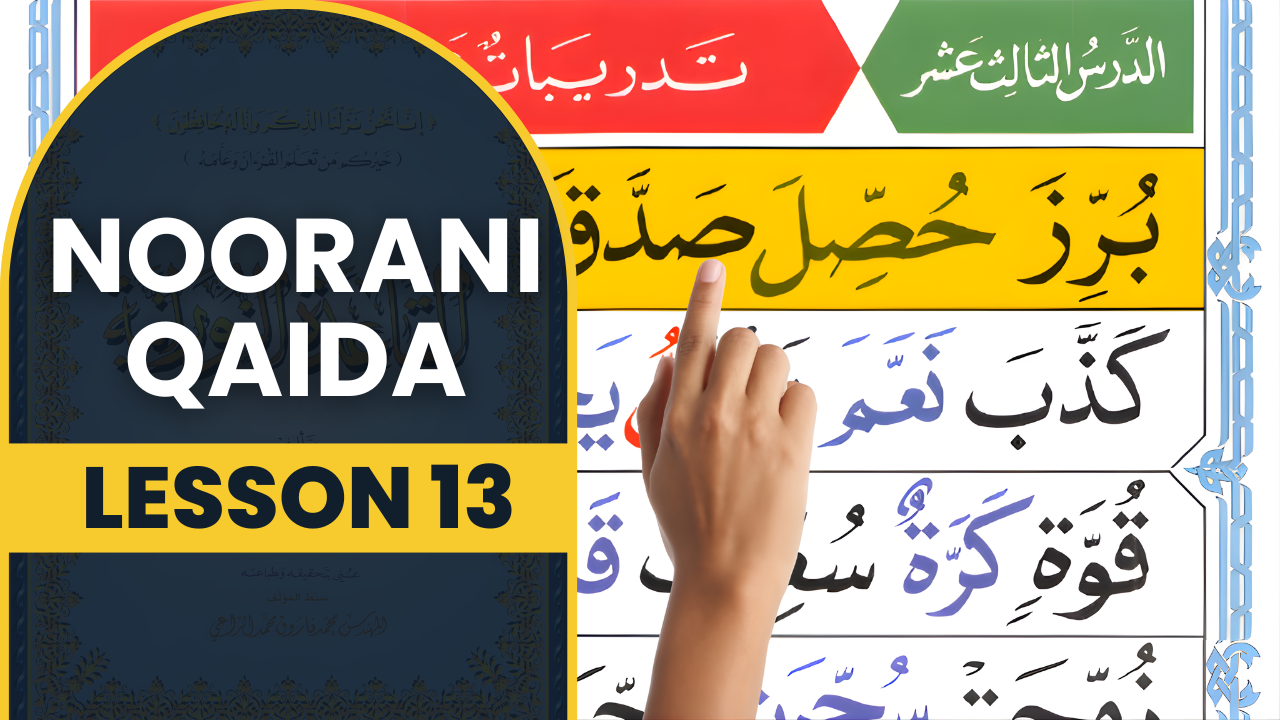
Noorani Qaida Lesson 13 is a dedicated practice lesson focused on applying Tashdeed (Shaddah) inside complete Quranic words. After learning the concept and pronunciation mechanics of Shaddah in Lesson 12, learners now move into structured word-level drills that strengthen fluency, articulation control, and Tajweed precision.
Tashdeed is not just about doubling a letter in isolation. In real Quran reading, Shaddah appears within complex word structures alongside Sukoon, Madd, and various vowel patterns. Lesson 13 trains the learner to handle these combinations smoothly.
For beginners and non-Arabic learners, this stage is extremely important. Correct Tashdeed application affects meaning, rhythm, and clarity in recitation.
At Rasool Academy, we guide students step by step through carefully structured practice so that doubling consonants becomes natural and confident.
🎥 Watch Noorani Qaida Lesson 13 – Tashdeed Practice in Quranic Words
Repeat each word slowly and focus on clear consonant doubling.
What Is the Focus of Lesson 13?
Lesson 13 focuses on:
- Practicing Tashdeed inside full words
- Strengthening consonant emphasis
- Coordinating Shaddah with vowels
- Improving rhythm and flow
- Eliminating hesitation in doubled letters
No new rule is introduced here. This lesson builds mastery through repetition and integration.
Lesson Overview
Book: Noorani Qaida
Lesson Number: 13
Topic: Practice Tashdeed in Quranic Words
Language: English-guided Arabic
Version: 02 – for Non-Arabic Learners
Teacher: Qari Rafiqul Islam
Learning Level: Beginner to Intermediate
Target Group: Children, adults, and new Muslims
Quick Review: What Is Tashdeed?
Tashdeed (Shaddah) indicates a doubled consonant.
Structure:
Letter with Sukoon + Same letter with vowel.
Example:
رَبِّ
Pronounced as:
Rab + bi
The first “b” is stopped briefly (hidden Sukoon).
The second “b” carries the vowel.
Lesson 13 ensures this doubling remains clear inside longer word structures.
Why Word-Level Practice Is Necessary
In isolated drills, Shaddah is easy.
But inside real words, learners often:
- Rush the doubled letter
- Lose vowel timing
- Blend the sounds incorrectly
- Reduce consonant strength
Lesson 13 corrects these habits through structured repetition.
Tashdeed with Different Vowel Patterns
1️⃣ Tashdeed with Fatha
Example:
حَقَّ
Pronounced clearly as:
Haq + qa
The doubled consonant must remain strong without stretching the vowel.
2️⃣ Tashdeed with Kasra
Example:
رَبِّ
Pronounced:
Rab + bi
The Kasra must be short and controlled.
3️⃣ Tashdeed with Damma
Example:
رُدُّ
Pronounced:
Rud + du
Lips must round clearly when Damma is present.
Lesson 13 trains learners to apply correct vowel timing after doubling.
Tashdeed Combined with Madd
In Quranic words, Tashdeed may appear alongside Madd letters.
Example structure:
Letter with Shaddah followed by Madd.
Students must:
- Double consonant clearly
- Then elongate vowel if required
- Maintain rhythm balance
This coordination is essential for fluent Quran recitation.
Tashdeed Combined with Sukoon
Some words contain both Shaddah and Sukoon.
Example pattern:
Double consonant followed by unvowelled letter.
Students must:
- Apply doubling
- Move smoothly through the unvowelled consonant without inserting a vowel.
- Avoid inserting hidden vowels
Lesson 13 strengthens this coordination.
Phonetic Mechanics of Tashdeed in Words
Correct Tashdeed pronunciation requires:
- Consonant pressure
- Clear articulation point (Makharij)
- Balanced timing
- Smooth transition
It should not:
- Sound aggressive
- Sound dragged
- Lose clarity
Controlled emphasis is the key.
Common Mistakes in Lesson 13
❌ Ignoring the doubling
❌ Turning Tashdeed into Madd
❌ Weak consonant emphasis
❌ Adding extra vowel
❌ Rushing through doubled letters
Correction method:
Break word into two parts:
Consonant stop → vowel release
Repeat slowly until natural.
Developing Fluency Through Tashdeed Practice
Lesson 13 improves:
- Recognition speed
- Consonant strength
- Rhythm consistency
- Word-level reading flow
Before mastering this stage, learners often hesitate at doubled letters.
After consistent practice, doubling becomes automatic.
Breath Control and Tashdeed
Tashdeed slightly increases consonant duration.
However, it should not consume excessive breath.
Learners must maintain steady airflow without tension.
Balanced breathing supports smooth recitation.
Structured Practice Plan
Day 1–2: Practice simple Tashdeed words
Day 3–4: Combine Tashdeed with vowels
Day 5–6: Mixed patterns with Madd and Sukoon
Day 7: Full reading drills
Practice 15–20 minutes daily.
Consistency builds fluency.
Psychological Growth at This Stage
Lesson 13 builds confidence.
Before this lesson:
Learners hesitate at doubled consonants.
After mastering it:
Reading becomes smoother and more powerful.
This is a major fluency milestone.
How Lesson 13 Prepares for Advanced Lessons
Mastering Tashdeed in words prepares students for:
- Advanced Shaddah combinations
- Verse-level reading
- Complex Tajweed interactions
- Long passage recitation
Lesson 13 ensures consonant doubling remains strong even in longer text.
Teaching Method at Rasool Academy
We focus on:
- Slow word breakdown
- Clear consonant emphasis
- Visual demonstration
- Gradual speed increase
- Calm repetition
This prevents long-term pronunciation errors.

Spiritual Reflection
Tashdeed strengthens the sound of divine words.
Doubling letters correctly reflects discipline and reverence.
Each properly pronounced consonant honors the structure of revelation.
Precision in recitation brings spiritual reward.
Continue Learning – Complete Noorani Qaida Course
Frequently Asked Questions
Is Lesson 13 introducing a new rule?
No. It strengthens Tashdeed practice in real words.
Why is this lesson harder than Lesson 12?
Because it integrates Shaddah within full word structures.
How long should I practice daily?
15–20 minutes of focused repetition.
What should I focus on most?
Clear doubling and vowel timing.
What comes after Lesson 13?
Lesson 14 combines Shaddah and Sukoon in advanced patterns.
Key Takeaways
- Tashdeed doubles a consonant.
- Word-level practice builds fluency.
- Do not confuse with Madd.
- Maintain vowel timing after doubling.
- Practice builds Tajweed confidence.
Conclusion
Noorani Qaida Lesson 13 strengthens Tashdeed application inside Quranic words. By practicing doubled consonants within structured patterns, learners develop rhythm stability, articulation strength, and Tajweed accuracy.
With steady repetition, Shaddah becomes natural and recitation becomes powerful and clear.
May Allah grant clarity and reward in learning His Book.