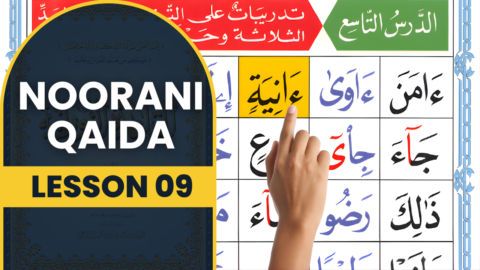
Noorani Qaida Lesson 5 | Learn Tanween (Double Vowels) in Arabic
Noorani Qaida Lesson 5 introduces Tanween (Double Vowel Marks) — an essential step in mastering Quranic pronunciation. After learning Harakat (Fatha, Kasra, and Damma) in Lesson 4, students now learn how these short vowels are doubled to produce a distinct nasal ending sound.
Tanween is not merely a repetition of vowels. It introduces a controlled “n” sound (Noon Saakin sound) at the end of a syllable, which plays a foundational role in Tajweed rules later on.
For non-Arabic learners, Tanween may seem small visually, but phonetically it is powerful. It builds nasal control, airflow precision, and prepares the learner for advanced Tajweed topics such as Idgham, Ikhfa, and Iqlab in future lessons.
At Rasool Academy, we teach Tanween slowly and methodically so that learners understand both its sound and structural purpose in Quran recitation.
🎥 Watch the Noorani Qaida Lesson 5 – Learn Double Vowels in Arabic
You can watch the complete Lesson 5 video on the Rasool Academy YouTube channel to practice Tanween step by step with guided pronunciation.
What Is Tanween in Arabic?
Tanween refers to the doubling of short vowel marks at the end of a letter. It produces a soft “n” sound added to the vowel.
There are three types of Tanween:
- Fathatain ( ـً )
- Kasratain ( ـٍ )
- Dammatain ( ـٌ )
For example:
بً = Ban
بٍ = Bin
بٌ = Bun
Notice that Tanween always appears at the end of a word or syllable and produces a light nasal “n” sound.
Lesson Overview
Book: Noorani Qaida
Lesson Number: 5
Topic: Tanween (Double Vowels)
Language: English-guided Arabic
Version: 02 – for Non-Arabic Learners
Teacher: Qari Rafiqul Islam
Student: Sumaiya Islam
Learning Level: Beginner
Target Group: Children, new Muslims, and non-Arabic speakers
Deep Understanding of Tanween
1️⃣ Linguistic Meaning of Tanween
The word “Tanween” comes from “Noon.” It literally means adding a Noon sound.
However, this Noon is not written as a visible letter (ن). Instead, it is represented by doubling the vowel mark.
This subtle design in Arabic writing preserves elegance while maintaining pronunciation accuracy.
2️⃣ Phonetic Structure of Tanween
Tanween consists of two components:
- A short vowel (Fatha, Kasra, or Damma)
- A hidden Noon Saakin sound
For example:
بً = Ba + n
But the “n” is nasal and light, not heavy.
A clear Noon involves its tongue articulation and natural nasal resonance. How Tanween is joined depends on the following letter: Izhar, Idgham, Iqlab or Ikhfa.
This distinction is extremely important for correct Tajweed later.
The Three Types of Tanween Explained in Depth
🔹 Fathatain (Double Fatha – ـً )
Sound: “an”
Example:
كً → Kan
Fathatain produces a slightly open “a” sound followed by a soft nasal ending.
Mouth position:
- Open slightly for Fatha
- Allow nasal airflow for the “n”
Common mistake:
Learners sometimes say “kaan” (long sound).
Correction: Keep it short — “kan.”
🔹 Kasratain (Double Kasra – ـٍ )
Sound: “in”
Example:
بٍ → Bin
This produces a short “i” sound followed by nasalization.
Kasratain often feels lighter and requires careful airflow control.
Common mistake:
Confusing “in” with “een.”
Correction: Keep the vowel short.
🔹 Dammatain (Double Damma – ـٌ )
Sound: “un”
Example:
رٌ → Run
This requires lip rounding (for Damma) plus nasal airflow.
Common mistake:
Forgetting lip rounding.
Correction: Round lips first, then release nasal sound.
The Role of Tanween in Quran Reading
Tanween appears frequently in Quranic words.
For example:
عَلِيمٌ
كِتَابًا
If Tanween is mispronounced, the rhythm and Tajweed accuracy are affected.
Later in Tajweed studies, Tanween interacts with following letters to create rules like:
- Idgham
- Ikhfa
- Iqlab
- Izhar
Thus, Lesson 5 builds the groundwork for those advanced rules.

Step-by-Step Learning Focus in Lesson 5
1️⃣ Recognizing Double Vowel Signs
Students learn to visually distinguish:
- Single Fatha vs Double Fatha
- Single Kasra vs Double Kasra
- Single Damma vs Double Damma
Visual accuracy prevents pronunciation errors.
2️⃣ Controlling Nasal Sound (Ghunnah Awareness)
Tanween introduces early nasal control.
Students practice allowing air through the nose briefly without exaggeration.
This strengthens articulation discipline.
3️⃣ Maintaining Short Vowel Length
Tanween vowels remain short — not stretched.
Duration must remain equal to single Harakat timing.
Teaching Method at Rasool Academy
We focus on:
- Slow demonstration of each Tanween type
- Repetition drills
- Visual comparison with single Harakat
- Nasal sound awareness
- Clear English guidance
This structured progression prevents confusion later.
Common Difficulties in Lesson 5
❌ Overstretching the vowel
Solution: Keep sound short and crisp.
❌ Ignoring the nasal ending
Solution: Focus on light “n” sound.
❌ Confusing Tanween with Noon letter
Solution: Understand Tanween is not a written Noon.
Practical Study Plan
Day 1–2: Practice Fathatain
Day 3–4: Practice Kasratain
Day 5–6: Practice Dammatain
Day 7: Combine all three
Practice 10–15 minutes daily.
Consistency builds fluency.
Spiritual Reflection
Every vowel mark in the Qur’an has divine precision. Tanween may look small, but it protects meaning and rhythm.
The Prophet (peace be upon him) said:
“Whoever recites a letter from the Book of Allah will receive ten rewards.”
Even mastering a single Tanween carries reward.
Correct pronunciation preserves the sacred message.
Summary of Key Points
- Tanween is a double vowel mark.
- It adds a nasal “n” sound.
- There are three types: Fathatain, Kasratain, Dammatain.
- Tanween prepares learners for Tajweed rules.
- Short vowel timing must remain controlled.

Continue Learning – Complete Noorani Qaida Course
Frequently Asked Questions
1. What is Tanween in Noorani Qaida?
Tanween is the doubling of short vowels that produces a nasal “n” sound.
2. Is Tanween the same as Noon?
No. It sounds like Noon but is not written as the letter Noon.
3. Why is Tanween important in Quran reading?
It affects Tajweed and pronunciation rules.
4. How long should Tanween be stretched?
It should remain short like a normal vowel.
5. What comes after Lesson 5?
Lesson 6 practises Harakat and Tanween together; Sukoon is introduced in Lesson 10.
Conclusion
Noorani Qaida Lesson 5 strengthens pronunciation by introducing Tanween and controlled nasalization. This lesson refines articulation, timing, and vowel precision — preparing students for deeper Tajweed learning.
With daily practice and careful listening, Tanween becomes natural and smooth.
May Allah grant clarity to every learner and reward every effort made in reciting His Book.
Tanween in connected reading and at a stop
In connected reading, Tanween is a short vowel followed by an unwritten Noon; the next letter determines whether the Noon is clear, merged, changed or concealed. Do not impose a two-count Ghunnah in every case. At a normal stop, -un and -in are dropped; -an normally becomes a two-count ā, with exceptions such as Tā Marbūṭah, which is stopped on as h. Practise connected and stopped forms separately. See Noon Sakinah and Tanween.