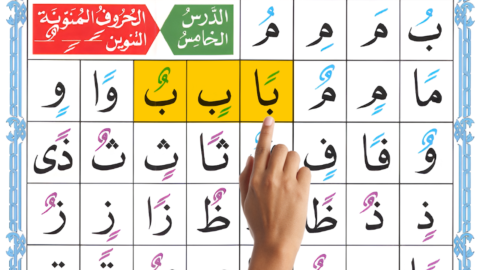
Qaida Noorania Lesson 13 | Learn Shaddah in Quran with Tajweed
Welcome to Qaida Noorania Lesson 13 (Complete) — your advanced guide to mastering Shaddah (ّ) or Tashdeed (التشديد) in Quranic recitation.
If you’ve completed Lesson 12, you already know how to identify Shaddah; now it’s time to apply it perfectly within full words, phrases, and verses.
Shaddah is one of the most common and essential Tajweed symbols in the Quran.
A single mistake in it can completely change the meaning of a word — so this lesson is all about accuracy, clarity, and fluency.
Watch Qaida Noorania Lesson 13 Complete
Follow along carefully:
- Listen to how the teacher emphasizes each doubled letter.
- Repeat slowly and clearly after each example.
- Focus on rhythm — Shaddah is about controlled strength, not speed.
Understanding Shaddah in Quranic Recitation
The Shaddah mark (ّ) means that a letter is pronounced twice —
first without a vowel (with Sukoon) and then with a vowel (Harakah).
For example:
- Without Shaddah: رَبَ = “He raised”
- With Shaddah: رَبَّ = “Lord”
The difference is both meaningful and spiritual — because correct stress gives the Quran its distinct rhythm and flow.
How to Read Shaddah Properly
- When you see a Shaddah, hold the letter slightly.
- Pronounce it once softly (as if with Sukoon), then again with its Harakah.
- Don’t stretch the sound; keep it tight and balanced.
- Continue smoothly into the next letter.

Example: مَدَّ → “Madda” — hold and release the D sound clearly.
Shaddah Practice Words
| Word | Transliteration | Meaning |
|---|---|---|
| رَبَّ | Rabba | Lord |
| مَدَّ | Madda | He extended |
| شَدَّ | Shadda | He pulled |
| حَقٌّ | Haqq-un | Truth |
| أَشَدُّ | Ashaddu | Stronger |
| يُسَبِّحُ | Yusabbihu | He glorifies |
| يُحِبُّ | Yuhibbu | He loves |
| إِنَّا | Inna | Indeed, We |
Practice reading these repeatedly until you can stress each doubled sound naturally and evenly.
Shaddah with Harakat (Vowels)
| Harakah | Example | Transliteration | Meaning |
|---|---|---|---|
| Fatha (َ) | مَدَّ | Madda | He extended |
| Kasra (ِ) | رَبِّ | Rabbi | My Lord |
| Damma (ُ) | يُحِبُّ | Yuhibbu | He loves |
No matter the vowel, the rule stays the same — every Shaddah letter is doubled in pronunciation.
Shaddah in Quranic Words and Verses
| Word | Translation | Surah Reference |
|---|---|---|
| إِيَّاكَ | You alone | Al-Fātiḥah 1:5 |
| إِنَّا | Indeed, We | Al-Kawthar 108:1 |
| رَبَّنَا | Our Lord | Al-Baqarah 2:286 |
| أَشَدُّ | Stronger | Al-Baqarah 2:165 |
| حَقٌّ | Truth | Al-Kahf 18:21 |
| يُسَبِّحُ | He glorifies | Al-Jumu‘ah 62:1 |
Each of these examples includes a Shaddah that affects both pronunciation and meaning.
Listen carefully to your teacher or a Qari to imitate the correct sound.
Common Mistakes and How to Fix Them
| Mistake | Reason | Correction |
|---|---|---|
| Ignoring the double sound | Reading too quickly | Double the consonant correctly without an added pause. |
| Over-stretching the sound | Confusing with Madd | Keep short and firm |
| Missing Sukoon before Shaddah | Lack of awareness | Imagine the hidden Sukoon |
| Mixing heavy & light letters | Weak articulation | Learn proper Makharij |
| Skipping the stress | Carelessness | Recite slowly with attention |
Daily Shaddah Practice Plan
- Read 10 Shaddah words daily.
- Focus on pronunciation, not speed.
- Record and compare your recitation with the video.
- Practice alternating between Shaddah and plain words.
- Revise previous lessons weekly.
With daily 10–15 minutes of practice, you’ll develop a natural flow in your Tajweed reading.
Relationship Between Shaddah and Tajweed Rules
Shaddah is directly linked to several Tajweed rules:
- Idgham (merging letters)
- Ghunna (nasal sound)
- Tafkheem (heaviness)
- Tarqeeq (lightness)
When you master Shaddah, these rules become easier to apply automatically.
This is why every Qari spends extra time perfecting Shaddah practice.
Advanced Tip: Shaddah with Sukoon and Madd
Sometimes Shaddah comes right after a Sukoon or alongside Madd letters.
This combination makes pronunciation slightly more advanced — requiring full control of airflow and rhythm.
| Example | Combination | Transliteration | Meaning |
|---|---|---|---|
| أَشَدُّ | Shaddah (contains an underlying unvowelled consonant) | Ashaddu | Stronger |
| يُسَبِّحُ | Shaddah (contains an underlying unvowelled consonant) | Yusabbihu | He glorifies |
| أَحَقُّ | Shaddah (contains an underlying unvowelled consonant) | Ahaqqu | More rightful |
Practice these carefully to maintain clarity between stop (Sukoon) and stress (Shaddah).
Next Lesson – Shaddah & Sukoon Combined Practice
Qaida Noorania Lesson 14 – Shaddah & Sukoon Combined Practice
In Lesson 14, you’ll learn to recite words that include both Shaddah (ّ) and Sukoon (ْ) in one place.
This will help you achieve perfect fluency and Tajweed balance in Quranic reading.
More Lessons from Rasool Academy
- Qaida Noorania Lesson 1: Learn Arabic Alphabet (Alif Baa Taa)
- Qaida Noorania Lesson 2: Learn Arabic Joint Letters
- Qaida Noorania Lesson 3: Huroof e Muqattaat in Quran
- Qaida Noorania Lesson 4: Harakaat – Fatha, Kasra, Damma
- Qaida Noorania Lesson 5: Tanween – Double Fatha, Kasra & Damma
- Qaida Noorania Lesson 6: Harakaat & Tanween Practice
- Qaida Noorania Lesson 7: Alif Madd, Ya Madd & Waw Madd
- Qaida Noorania Lesson 8: Huroof al Madd & Huroof al Leen
- Qaida Noorania Lesson 9: Practice Tanween, Madd & Leen Letters
- Qaida Noorania Lesson 10: Sukoon Practice in Arabic
- Qaida Noorania Lesson 11: Sukoon in Quranic Words
- Qaida Noorania Lesson 12: Learn Shaddah (Tashdeed)
- Qaida Noorania Lesson 13: Shaddah in Quran – Complete Practice
- Qaida Noorania Lesson 14: Shaddah & Sukoon Combined Practice
- Qaida Noorania Lesson 15: Double Shaddah in One Word
- Qaida Noorania Lesson 16: Shaddah + Sukoon with Madd Letters
- Qaida Noorania Lesson 17: Final Exercises on All Previous Lessons

FAQ
Q1: What does Shaddah mean in Quran?
→ It means to pronounce a letter twice — once unvowelled, once with a vowel.
Q2: How is Shaddah different from Sukoon?
→ Sukoon marks an unvowelled consonant; Shaddah marks a doubled consonant. Neither automatically requires a pause.
Q3: Why is this lesson called “Complete”?
→ Because it combines all Shaddah exercises (13.1, 13.2, 13.3) into one full practice session.
Q4: How can beginners master Tashdeed quickly?
→ By repeating daily after the teacher, using slow, clear pronunciation, and recording progress.
Conclusion
Shaddah brings power, rhythm, and clarity to Quranic recitation.
When you recite with correct Tashdeed, your voice flows naturally, and each word carries its intended meaning.
Be patient and consistent — mastering Shaddah is mastering balance in Tajweed.
اللهم اجعل القرآن ربيع قلوبنا ونور صدورنا
O Allah, make the Quran the spring of our hearts and the light of our souls.