Learn Surah Al-Lahab Word by Word with Tajweed | 1X Practice
Surah Al-Lahab (also known as Surah Al-Masad) is one of the most powerful short surahs in the Qur’an. Despite having only five verses, it carries deep meaning, strong warnings, and clear lessons. Learning this surah word by word with Tajweed helps you not only recite it correctly but also understand its message and memorize it more effectively.
How to use this practice guide: 1X means one suggested practice round for you. Use the recording below as a pronunciation model, then pause or replay it to complete your rounds. This is a study plan, not a count of the repetitions inside the recording; the video player may show a different repetition label.
This guide is designed to help beginners and intermediate learners master Surah Al-Lahab through a 1X practice method, focusing on pronunciation, Tajweed rules, and step-by-step repetition.
Watch Surah Al-Lahab Word by Word Guided Practice
What is Surah Al-Lahab (Al-Masad)?
Surah Al-Lahab is the 111th chapter of the Qur’an. It was revealed in Makkah and consists of five short verses. The surah speaks about Abu Lahab, one of the strongest opponents of Islam, and his ultimate failure despite his wealth and power.
Key Themes:
- The consequences of arrogance and rejection of truth
- The temporary nature of wealth and status
- The certainty of divine justice
Why Learn Surah Al-Lahab Word by Word?
Learning word by word is one of the most effective methods for Quran learning, especially for beginners.
Benefits:
- Improves pronunciation (Makharij)
- Helps apply Tajweed rules correctly
- Makes memorization easier
- Builds confidence in recitation
- Enhances understanding of meaning
What is the 1X Practice Method?
The 1X practice method means:
- Listening to each word or verse carefully
- For 1X practice, complete one careful reading pass. Listen, pause and replay individual words as needed; additional practice is optional and should follow your progress.
This method helps your brain absorb pronunciation patterns quickly and strengthens memory.
How to Use It:
- Listen carefully
- Repeat slowly
- Repeat again with confidence
- Move to the next word
Word-by-Word Breakdown with Tajweed
Let’s break down Surah Al-Lahab step by step.
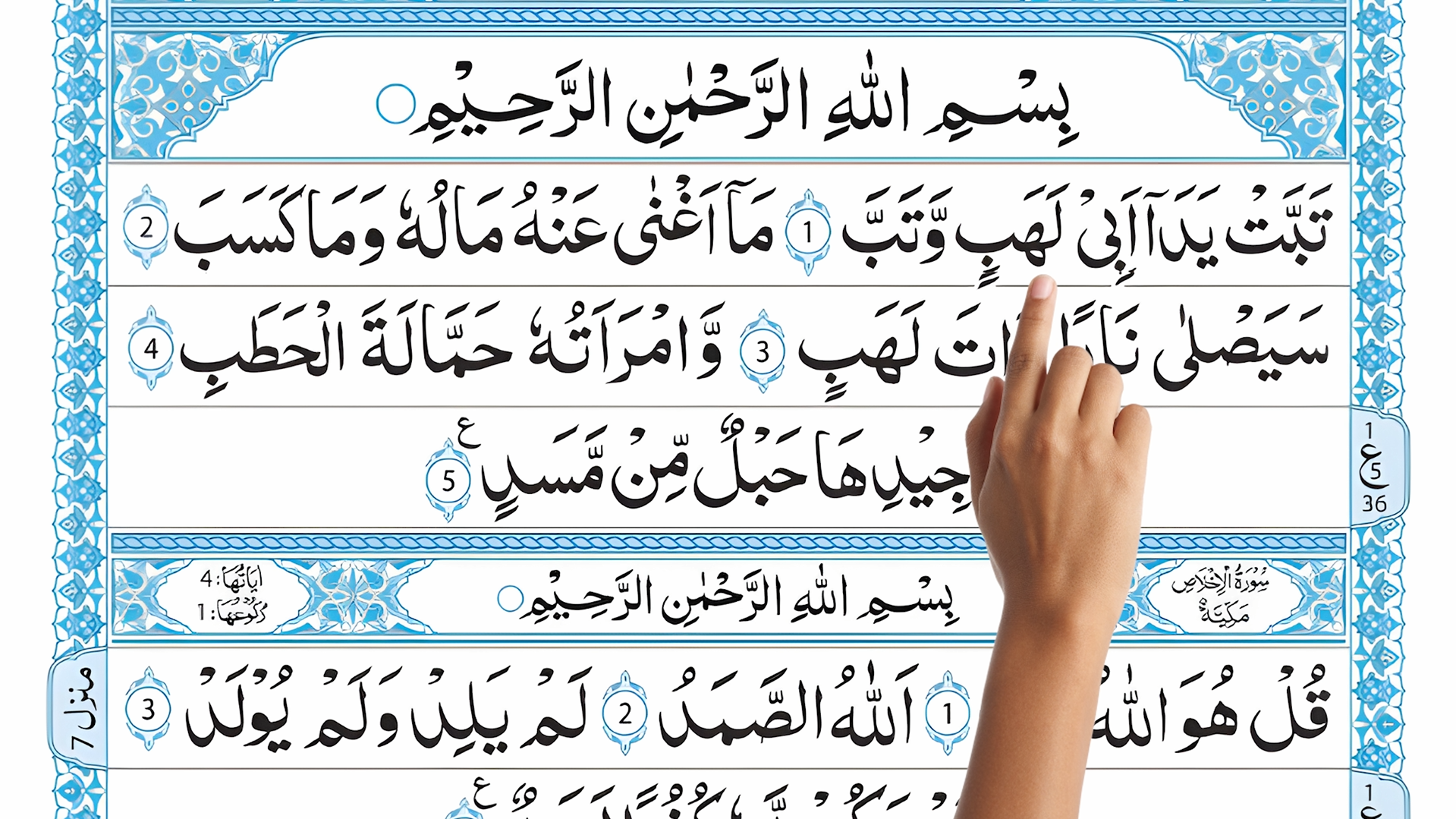
Verse 1: تَبَّتْ يَدَا أَبِي لَهَبٍ وَتَبَّ
Word-by-Word:
- تَبَّتْ (Tabbat)
Means: Perished
👉 Tajweed: Tā (ت) is light; give the doubled Bā (بّ) its full duration. - يَدَا (Yadaa)
Means: Two hands
👉 Stretch the “aa” sound (Madd) - أَبِي (Abī)
Means: Of Abu
👉 Soft “ee” sound at the end - لَهَبٍ (Lahabin)
Means: Lahab
👉 Tanween (double kasrah sound) - وَتَبَّ (Wa Tabb)
Means: And perished
👉 Emphasis on “Tabb”
Verse 2: مَا أَغْنَىٰ عَنْهُ مَالُهُ وَمَا كَسَبَ
Word-by-Word:
- مَا (Maa) – Did not
- أَغْنَىٰ (Aghnaa) – Benefit
👉 Ghayn (غ) comes from the throat; it is not a Ghunnah sound. - عَنْهُ (Anhu) – Him
👉 Clear “Haa” sound - مَالُهُ (Maaluhu) – His wealth
👉 Madd (stretch “maa”) - وَمَا كَسَبَ (Wa maa kasab) – And what he earned
Verse 3: سَيَصْلَىٰ نَارًا ذَاتَ لَهَبٍ
Word-by-Word:
- سَيَصْلَىٰ (Sayaslaa) – He will burn
- نَارًا (Naaraa) – Fire
👉 Madd + Tanween - ذَاتَ (Dhaata) – Of
👉 Dhāl (ذ) is light, with the tongue tip near the upper front teeth; do not confuse it with heavy Ẓā (ظ). - لَهَبٍ (Lahabin) – Flame
Verse 4: وَامْرَأَتُهُ حَمَّالَةَ الْحَطَبِ
Word-by-Word:
- وَامْرَأَتُهُ (Wamra’atuhu) – And his wife
👉 Careful pronunciation of “ra” and “ta” - حَمَّالَةَ (Hammaalata) – Carrier
👉 Shaddah (double letter emphasis) - الْحَطَبِ (Al-hatab) – Wood
👉 Clear “Haa” sound
Verse 5: فِي جِيدِهَا حَبْلٌ مِّن مَّسَدٍ
Word-by-Word:
- فِي (Fii) – In
👉 Madd (stretch) - جِيدِهَا (Jeedihaa) – Her neck
- حَبْلٌ (Hablun) – Rope
👉 Tanween - مِّن (Min) – From
👉 Ghunnah (nasal sound) - مَّسَدٍ (Masad) – Twisted fiber
👉 Shaddah + Tanween
Tajweed Rules You Learn in This Surah
While practicing Surah Al-Lahab, you naturally learn:
1. Madd (Stretching)
- Example: مَا، نَارًا، فِي
- Hold the sound for 2 counts
2. Shaddah (Emphasis)
- Example: حَمَّالَةَ
- Double the letter sound
3. Tanween (Double Vowels)
- Example: لَهَبٍ، حَبْلٌ
- Adds “n” sound
4. Ghunnah (Nasal Sound)
- Example: مِّن مَّسَدٍ
- A two-count Ghunnah accompanies the relevant Idgham with Ghunnah; it is nasal resonance, not a Qalqalah echo.
Step-by-Step Practice Plan
Step 1: Listen Carefully
Play the video and focus on pronunciation.
Step 2: Repeat Each Word (1X)
For 1X practice, complete one careful reading pass. Listen, pause and replay individual words as needed; additional practice is optional and should follow your progress.
Step 3: Practice Verse by Verse
Combine words into full verses.
Step 4: Recite Full Surah
Once comfortable, recite the entire surah smoothly.
Step 5: Daily Revision
Repeat daily for strong memorization.
Common Mistakes to Avoid
- Rushing through words
- Ignoring Madd (not stretching properly)
- Skipping Shaddah emphasis
- Confusing light letters such as ت and ذ with heavy letters such as ط and ظ
- Not repeating enough
Who Should Learn This?
This lesson is perfect for:
- Beginners learning Quran reading
- Kids starting Tajweed
- Adults improving recitation
- Anyone memorizing short surahs
Tips for Faster Memorization
- Practice after Fajr (best focus time)
- Listen and repeat consistently
- Use audio + visual learning
- Revise before sleeping
- Teach someone else (boosts memory)

Frequently Asked Questions (FAQ)
1. How long does it take to memorize Surah Al-Lahab?
The time varies with reading ability, age and revision. Learn at a comfortable pace and review regularly.
2. Is Tajweed necessary for short surahs?
Yes. Even short surahs should be recited correctly with proper Tajweed.
3. What is the benefit of 1X practice?
It improves pronunciation, retention, and confidence quickly.
4. Can kids follow this method?
Absolutely. It’s one of the easiest methods for children.
5. Should I learn meaning as well?
Yes. Understanding meaning helps with deeper connection and memorization.
Conclusion
Surah Al-Lahab is short but powerful. By learning it word by word with Tajweed and using the 1X practice method, you build a strong foundation in Quran recitation.
Consistency is the key. Even 10–15 minutes of focused daily practice can help you master this surah quickly and accurately.
Start today, follow the method, and you’ll see real improvement in your Tajweed and confidence.
Continue your practice
For the same Surah, use our 3X memorization practice. Beginners can build the foundations with Qaida Noorania Lesson 1. If you need feedback on a word or rule, contact the teacher.
Arabic text and reading guidance
Check the full Arabic text and verse numbering at Quran.com — Surah 111. Roman transliteration is an aid, not a substitute for the Arabic text or a teacher’s pronunciation. Natural Madd, Madd before Hamzah, and Madd at a stop have different rules; do not give every long vowel two counts.
Connected-reading details
When joining يَدَا أَبِي and مَا أَغْنَىٰ, a long vowel is followed by Hamzah in the next word: Madd Munfasil, so do not apply a blanket two-count instruction. Follow your teacher’s Hafs route. Dhāl (ذ) and Tā (ت) are light letters; Ṣād (ص), Ṭā (ط) and Ghayn (غ) have their own heavy qualities. In مِّن مَّسَدٍ, the joined Noon merges into Mīm with Ghunnah.